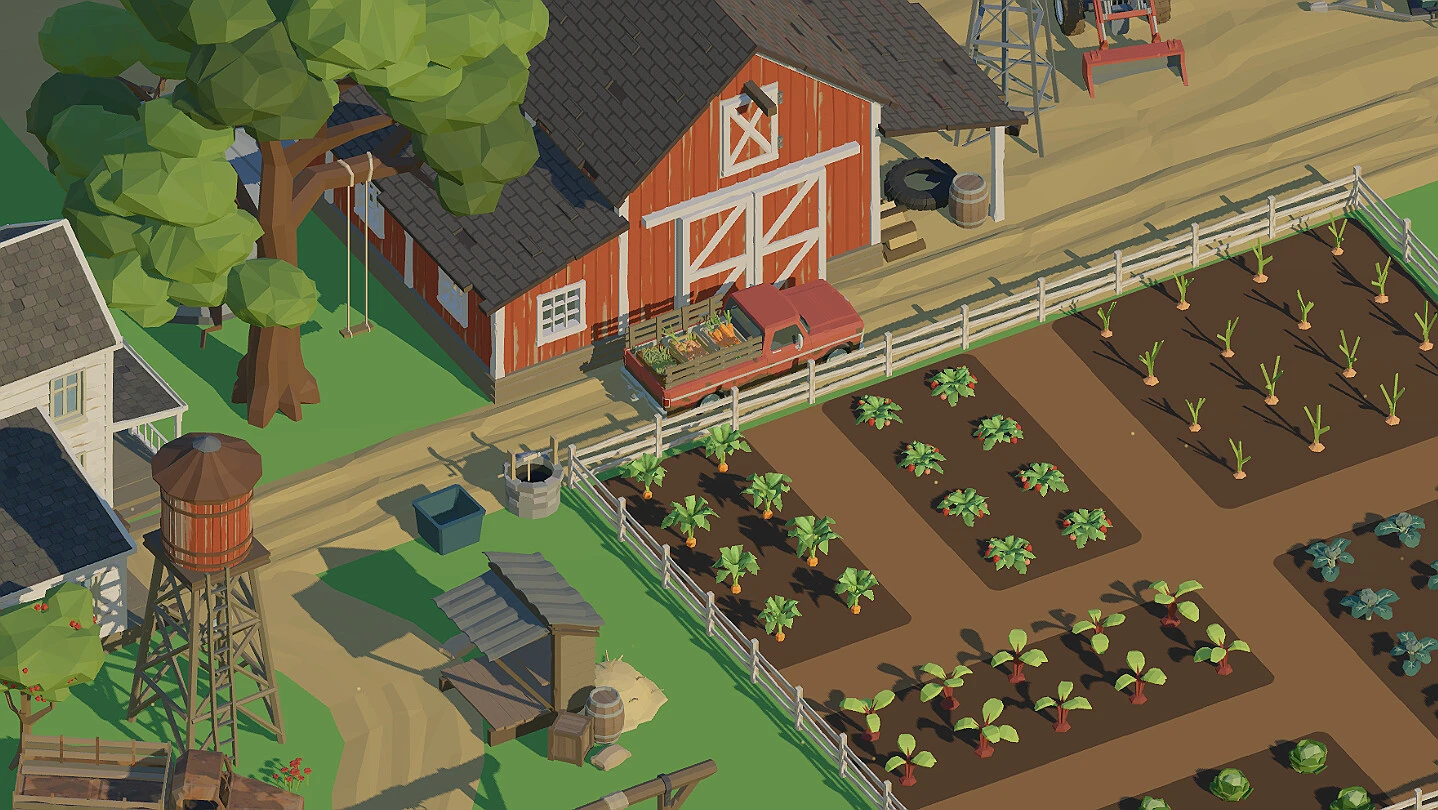
- Farm to Fortune earn coins fast strategies focus on repeatable income, not one-time rewards.
- Prioritize short cycles when you can check the farm often and longer cycles when you are away.
- Sell with purpose by comparing direct sales, orders, and upgrade requirements before spending.
- Protect your balance by keeping a reserve for seeds, feed, tools, and time-sensitive opportunities.
- Reinvest selectively into upgrades that increase output, reduce downtime, or improve storage.
Farm to Fortune Earn Coins Fast: Core Income Plan
Farm to Fortune earn coins fast becomes easier when every action supports a clear income loop. Instead of planting or producing whatever is available, organize your farm around three questions: how quickly can the item be completed, how much does it return, and what does it prevent you from doing?
The strongest early strategy is usually a balanced production schedule. Use fast crops or products to create frequent selling opportunities, while reserving a smaller part of the farm for longer cycles. This approach keeps coins moving without requiring every plot to be checked constantly.
Avoid spending your entire balance after a successful sale. A healthy reserve lets you restart production immediately, respond to profitable orders, and purchase essential inputs without waiting through an empty cycle.
| Income Activity | Best Use | Main Advantage | Main Risk |
|---|---|---|---|
| Short crop cycle | Frequent play sessions | Fast turnover and regular sales | Requires repeated collection |
| Long crop cycle | Extended offline periods | Less maintenance | Slower access to cash |
| Order completion | When required items are ready | Can improve sale value | May consume better direct-sale goods |
| Livestock production | Stable farm routines | Predictable output | Feed and upkeep can reduce profit |
| Upgrade investment | After building a reserve | Improves future efficiency | Delays immediate spending power |
Fast Turnover
Choose short production cycles when you can return often. Frequent collection helps maintain a steady stream of sellable goods.
Stable Reserve
Keep enough coins for the next production cycle, essential inputs, and an unexpected opportunity.
Order Control
Accept orders that use existing stock or provide a meaningful advantage over ordinary selling.
Selective Growth
Upgrade systems that improve output or reduce downtime before purchasing cosmetic or low-impact options.
Before starting a new cycle, check your available coins, storage space, and production queue. A profitable item is less useful if it blocks collection or leaves you unable to restart.
Choose the Right Farming Route
A good farming route reduces empty time between planting, collecting, processing, and selling. Your route should match your play schedule rather than forcing every session into the same pattern. If you play in short bursts, prioritize items that finish quickly. If you return only a few times per day, favor longer cycles and larger batches.
Storage is part of the route. When storage fills, production can stop even if the farm is generating valuable goods. Sell or process items before the next major collection window, and avoid filling storage with low-priority materials that are not connected to your current plan.
Use the following route structure as a flexible template:
Check the Market and Orders
Review available orders, direct sale values, and current production requirements. Mark the items that can be completed using stock already on hand.
Assign Short and Long Cycles
Fill most available space with the cycle that matches your schedule. Use a smaller portion for a different cycle so the farm is not dependent on one timing window.
Process Only High-Value Inputs
Convert raw materials when the finished item has a clear use, stronger sale value, or order advantage. Avoid processing items that consume scarce inputs without a purpose.
Collect in One Sweep
Return to the farm, collect completed goods, refill production, and clear storage in one organized pass.
Sell and Reinvest
Sell excess goods, keep materials needed for the next cycle, and spend only on upgrades that improve future earning capacity.
| Play Schedule | Recommended Route | Collection Style | Spending Priority |
|---|---|---|---|
| Frequent checks | Mostly short cycles | Several small collections | Production speed and storage |
| Two or three visits | Mixed cycles | Planned collection windows | Balanced output and capacity |
| Infrequent visits | Mostly long cycles | Large scheduled collections | Capacity and reliable inputs |
| Active session | Short cycles plus processing | Continuous rotation | Tools or stations that reduce downtime |
A common mistake is choosing the item with the highest listed sale price without considering completion time. Compare return per cycle and return per visit. A lower-value item can be better when it finishes several times before a more expensive item is ready.
Do not start a cycle that you cannot collect or support. Full storage, missing inputs, or an occupied production station can turn a high-value plan into wasted time.
Compare Sales, Orders, and Upgrades
Coins are most useful when they improve the next earning cycle. Before spending, separate purchases into three groups: items that increase output, items that reduce waiting, and items that provide convenience without improving income. The first two groups generally deserve earlier attention.
Orders can be attractive because they provide a defined goal, but not every order is automatically profitable. If an order consumes an item that is difficult to replace, compare it with the value of selling that item directly. Orders are strongest when they use surplus stock or help clear storage.
Upgrades should also be judged by payback. An upgrade that saves time every cycle can become valuable after repeated use, while an upgrade that only helps occasionally may be better postponed.
| Decision | Use It When | Hold Back When | Evaluation Question |
|---|---|---|---|
| Fill an order | Required goods are already available | It consumes scarce inputs | Does the reward beat a direct sale? |
| Buy production capacity | Stations are frequently occupied | Your inputs are inconsistent | Will the extra capacity stay active? |
| Expand storage | Collections often hit the limit | Storage is rarely full | Does it prevent repeated downtime? |
| Improve speed | You check the farm regularly | You play infrequently | Will reduced time create more collections? |
| Purchase convenience | Core production is stable | Coins are needed for inputs | Does it improve income or only comfort? |
Output Upgrades
Best when your inputs are reliable and your stations are active. More output has value only when you can sell or use it.
Speed Upgrades
Strong for active players because faster cycles can create additional collection windows during the same session.
Storage Upgrades
Useful when full storage interrupts production. Capacity is less urgent when collections are already easy to manage.
Keep a simple profit note for several cycles. Record the input cost, completion time, sale value, and whether the item occupied a station or storage slot. You do not need a complicated spreadsheet; a few comparisons are enough to identify which routine fits your farm.
Spend surplus coins after the next cycle is funded. This keeps your farm active while still allowing gradual improvements to production, speed, or storage.
Daily Coin-Farming Checklist
A repeatable checklist prevents small oversights from reducing your earnings. Begin each session by checking production, storage, and orders. Finish by funding the next cycle so the farm continues working after you leave.
Do not judge a session only by the coins visible at the end. Materials stored for a profitable order or the next production batch can represent future value. The better measure is whether your farm ended with active production, a usable reserve, and fewer bottlenecks.
Essential Coin Routine:
- Check orders and direct sale options before collecting everything
- Collect completed goods and free storage space
- Start a cycle that matches your next play window
- Keep enough coins for inputs and essential production
- Reinvest surplus coins into output, speed, or storage
- Review one inefficient step before ending the session
| Session Phase | Action | Result |
|---|---|---|
| Start | Check orders, storage, and active stations | Clear priorities before spending |
| Middle | Collect, process, and refill production | Fewer idle stations |
| Sale | Compare direct sales with order rewards | Better use of valuable stock |
| End | Fund the next cycle and reserve coins | Continuous farm activity |
| Review | Identify one bottleneck | Gradual improvement over time |
Use a reserve threshold that feels comfortable for your stage of progression. Early players may need a larger reserve because inputs and basic upgrades compete for the same coins. Later players can usually spend more aggressively if production is stable and storage is sufficient.
The most reliable coin farms are not always the most complicated. A simple routine that you can repeat consistently often beats a high-maintenance route that depends on perfect timing.
Match the next cycle to your real schedule. Short production is useful before active play, while longer production is more practical before a long break.
Common Mistakes That Slow Coin Growth
Several habits can make a farm look busy without making it profitable. The most common problem is spending immediately after every sale. This creates a cycle where the farm appears productive but cannot afford the next batch of inputs.
Another problem is mixing too many production goals. If every station is making a different item, storage becomes difficult to manage and orders may remain incomplete. Focus on a small number of connected goods until your balance and capacity improve.
Avoid treating every limited-time opportunity as mandatory. If an event or order requires expensive materials, compare its reward with the value of selling those materials through your normal route. A missed opportunity is usually less damaging than an unfunded production cycle.
| Mistake | Why It Hurts | Better Adjustment |
|---|---|---|
| Spending the full balance | Prevents the next cycle | Keep an input reserve |
| Filling every station randomly | Creates scattered inventory | Group production around a plan |
| Ignoring storage limits | Causes collection and queue delays | Sell or process before overflow |
| Chasing the highest price only | May require excessive time or inputs | Compare return per cycle |
| Buying upgrades too early | Slows short-term progression | Upgrade after stabilizing income |
| Holding all goods indefinitely | Blocks new production | Keep only items tied to a plan |
If a routine leaves you waiting, storage-blocked, or unable to afford inputs, change the route before changing the entire farm layout.
Farm to Fortune Earn Coins Fast FAQ
Q: What is the best way to Farm to Fortune earn coins fast?
Use a repeatable production loop that matches your play schedule. Combine short cycles for active sessions with longer cycles for offline periods, then reinvest surplus coins into upgrades that reduce downtime or improve output.
Q: Should I sell goods directly or complete orders?
Compare the order reward with the direct sale value and the replacement cost of the requested goods. Orders are usually more attractive when they use surplus stock or help clear storage without interrupting your next cycle.
Q: Which upgrade should I buy first?
Choose the upgrade that solves your biggest recurring bottleneck. Storage is useful when full capacity stops production, speed is valuable for frequent players, and output is stronger when your inputs and sales are already stable.
Q: Are short production cycles always more profitable?
Not necessarily. Short cycles can produce more collection opportunities, but they require more attention. A longer cycle may fit better when you cannot return often, so compare profit, time, inputs, and your actual play schedule.
The fastest sustainable coin strategy is a funded loop: choose a suitable cycle, collect on time, sell with a plan, and reinvest only after the next production run is secure.