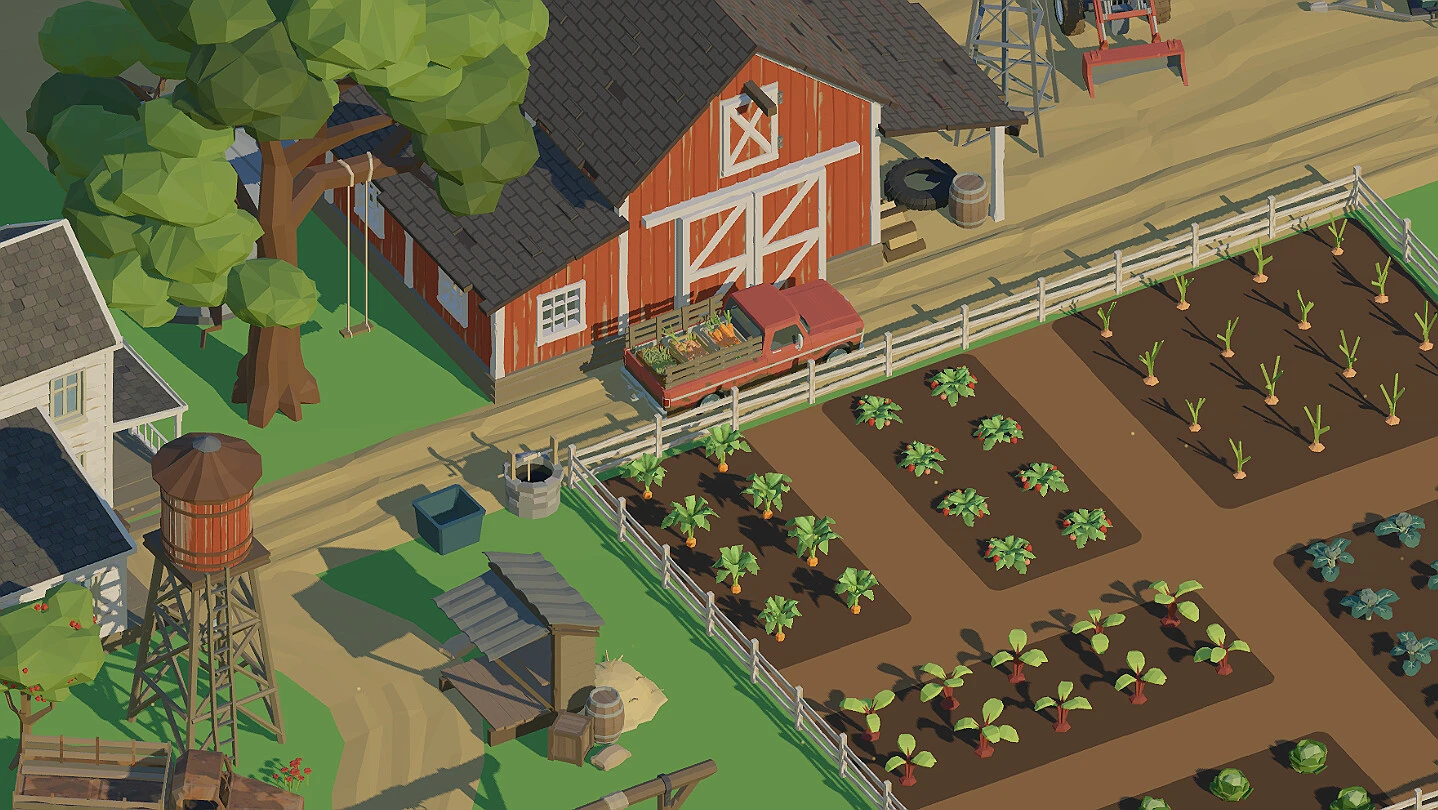
- Farm to Fortune crop guide: Balance growth time, sale value, and reinvestment speed.
- Early farming: Favor reliable crop cycles that help fund your first useful upgrade.
- Midgame planning: Keep plots active while matching crops to current objectives and cash flow.
- Longer cycles: Use higher-value options only when your farm can handle delayed income.
- Best habit: Record confirmed in-game values before committing to a full-field planting route.
Farm to Fortune Crop Guide Basics
The Farm to Fortune crop guide starts with one principle: the best crop is not always the one with the highest sale value. A crop also has a growth interval, an upfront cost, a space requirement, and an opportunity cost. A lower-value harvest may be more useful if it returns funds quickly enough to support another planting cycle or an important upgrade.
The core farming loop is straightforward:
- Prepare available farmland.
- Plant crops that fit your current funds and objectives.
- Wait for the production cycle to finish.
- Harvest the completed plots.
- Sell the produce and reinvest the proceeds.
This loop makes timing more important than simply filling every plot. If planting consumes all available funds, you may delay an upgrade or leave yourself unable to respond to a task. Keep a reserve whenever the next objective, shop purchase, or tool improvement is close.
| Farming factor | What to evaluate | Why it matters |
|---|---|---|
| Growth time | How long the crop occupies a plot | Short cycles return funds sooner |
| Sale value | Money received after selling | Higher value can support larger purchases |
| Upfront cost | Funds required before planting | Prevents overspending early |
| Plot usage | Space needed for production | Determines how efficiently land is used |
| Reinvestment speed | How quickly earnings fund the next cycle | Helps maintain steady progression |
Fast-Cycle Strategy
- Primary goal: Build early cash flow
- Use when funds are limited
- Supports frequent planting and selling
- Works well before major expansion
Balanced Strategy
- Primary goal: Maintain steady progress
- Mix production with upgrade spending
- Reduces long waiting periods
- Fits a developing farm
High-Value Strategy
- Primary goal: Improve earnings per harvest
- Better suited to established farms
- Requires patience and available reserves
- Benefits from expanded production space
Compare the money earned per completed cycle with the time spent waiting. A fast, repeatable harvest can be more useful than a larger payout that delays your next purchase.
Choosing Crops by Farm Stage
Crop priorities change as the farm develops. During the opening stage, preserving momentum is usually more important than maximizing one harvest. Use available plots consistently, but avoid turning every early coin into a long-term production commitment.
Once the farm has a reliable income loop, you can compare crops more carefully. The main question becomes whether a crop improves your current objective. For example, a longer cycle may fit an established farm with enough space and reserves, while a fast cycle may be preferable when you are saving for a tool or land upgrade.
| Farm stage | Preferred crop profile | Main objective | Common mistake |
|---|---|---|---|
| Opening | Fast or affordable cycle | Establish dependable income | Spending the entire starting balance |
| Developing | Balanced cycle | Fund upgrades and maintain production | Leaving plots unused during objectives |
| Expanding | Higher-value or mixed cycle | Use additional land efficiently | Expanding before production is stable |
| Established | Goal-specific mix | Optimize income and progression | Choosing by sale value alone |
Use this decision order before planting:
- Check the next known task or progression target.
- Confirm how much money must remain available.
- Compare the crop’s growth interval with your play session.
- Decide whether the farm needs quick cash or a larger later payout.
- Plant only as much as your current plan can support.
Check Your Available Funds
Review your current balance before buying seeds or committing to a full planting cycle. Keep enough currency for an upcoming shop purchase, task requirement, or essential upgrade when one is close.
Match the Crop to Your Timing
Choose a fast cycle when you expect to return soon and need another sale quickly. Choose a longer cycle when you can leave the farm running without interrupting your normal progression.
Use the Active Plots Efficiently
Plant the plots that support your current plan, but do not expand production beyond what your funds and objectives can sustain. Productive land is useful only when it fits the wider economy.
Harvest, Sell, and Recalculate
After selling the harvest, compare your new balance with the next upgrade or land target. Update your route instead of repeating the same crop automatically.
Do not spend every available coin on crops simply because empty plots are available. A reserve protects your progression when a task, tool upgrade, or shop opportunity appears.
Crop Profit Routes and Reinvestment
A profitable route is a repeatable sequence, not just a single high-value harvest. Your route should answer three questions: how often money returns, what the money funds next, and whether the farm remains productive while you wait.
Use a simple comparison rather than relying on the final sale value alone:
Practical crop value = sale proceeds − planting cost
Then consider the time required to complete the cycle. If two options produce similar returns, the shorter cycle usually provides more flexibility. If the longer cycle produces a clearly stronger return and you have enough reserves, it may support a better long-term route.
| Route type | Planting approach | Best use | Risk level |
|---|---|---|---|
| Quick turnover | Repeat affordable cycles | Early funds and frequent upgrades | Low |
| Balanced rotation | Alternate short and moderate cycles | Maintain income while progressing | Moderate |
| Delayed payout | Commit to longer production | Established farms with reserves | Moderate |
| Expansion route | Fill new land gradually | Grow capacity without draining funds | Higher |
Route A: Build Cash
Begin with affordable cycles, sell promptly, and direct profits toward the first upgrade that improves repeated farming actions.
Route B: Fund Progression
Keep enough land active to support income while reserving currency for tasks, shop access, and tool improvements.
Route C: Scale Production
Expand only after existing plots are used consistently. Add new capacity when you can support it with funds and a clear planting plan.
A useful reinvestment order is:
- Keep the current plots producing.
- Purchase an upgrade that affects repeated actions.
- Maintain a cash reserve for the next objective.
- Consider land expansion after income becomes stable.
- Reassess the crop mix whenever production capacity changes.
The best upgrade is usually the one that improves an activity you perform repeatedly. A tool or efficiency improvement may be more valuable than a larger farm if the additional land would remain unused. Expansion becomes stronger when you can fill the new space without interrupting the established cycle.
Treat every harvest as a decision point. Replant, save, or upgrade based on the next progression goal rather than following one crop route without adjustment.
Crop Tracking Checklist for 2026
The supplied game information does not establish a verified universal table of crop names, growth times, or sale prices. For accurate planning, record values from the current game build and update your route when balance changes affect production.
Use this tracking method to avoid mixing assumptions with confirmed values:
| Record | What to write down | When to update |
|---|---|---|
| Crop name | Exact in-game name | When discovered |
| Planting cost | Cost for one planting action | After balance updates |
| Growth interval | Observed time until harvest | After testing the crop |
| Sale proceeds | Money received from one harvest | After confirming the sale |
| Net return | Sale proceeds minus planting cost | Whenever values change |
| Best stage | Opening, developing, or established | After comparing alternatives |
Crop Route Checks:
- Confirm the planting cost before filling multiple plots
- Record the growth interval from the current game build
- Compare sale proceeds with the crop investment
- Keep enough funds for nearby tasks or upgrades
- Recheck the route after expanding farmland
When testing an unfamiliar crop, use one or a small number of plots first. This limits the cost of a bad assumption and gives you a practical comparison against your current route. Once the result fits your cash-flow needs, increase the planting volume.
Track more than the harvest total. A crop that looks strong in isolation may be less useful if it blocks a necessary purchase or keeps land occupied during a time-sensitive objective. Good records let you compare crops according to your own farm stage instead of relying on a general ranking that may not fit your situation.
Use current in-game values for final calculations. Growth times, prices, and crop availability may change as Farm to Fortune receives updates during 2026.
Beginner Mistakes and FAQ
New players often lose momentum by treating every plot, sale, and purchase as an isolated action. The strongest early habits are simple: keep production active, protect your reserve, and spend profits where they improve the next cycle.
| Mistake | Why it slows progress | Better adjustment |
|---|---|---|
| Planting with all available funds | Leaves no flexibility for objectives | Keep a working reserve |
| Choosing only by sale value | Ignores time and planting cost | Compare net return and cycle length |
| Expanding too early | Creates unused capacity | Expand after stable production |
| Ignoring the shop | Misses efficiency improvements | Review useful purchases regularly |
| Repeating one route blindly | Fails when goals or land change | Recalculate after each milestone |
For current release details, demo availability, supported languages, and official announcements, check the Farm to Fortune Steam store page and the Steam Community Hub.
Q: What is the best crop strategy for a new Farm to Fortune player?
Start with an affordable, repeatable cycle that returns funds quickly. Preserve enough currency for useful upgrades or nearby objectives instead of spending the full balance on one planting.
Q: Should I always choose the crop with the highest sale value?
No. Compare planting cost, growth interval, plot usage, and reinvestment speed. A lower-value crop can be better when you need frequent income or have limited funds.
Q: When should I expand my farmland?
Expand after your current plots are being used consistently and your income can support additional production. New land is less valuable when you cannot afford to fill it.
Q: How can I keep the crop guide accurate after updates?
Record the crop name, planting cost, growth interval, and sale proceeds from the current build. Recalculate net returns whenever the game changes crop balance or progression requirements.
The most reliable route is the one you can repeat without interrupting progression. Keep plots active, protect your reserve, and adjust crop choices whenever your farm reaches a new stage.