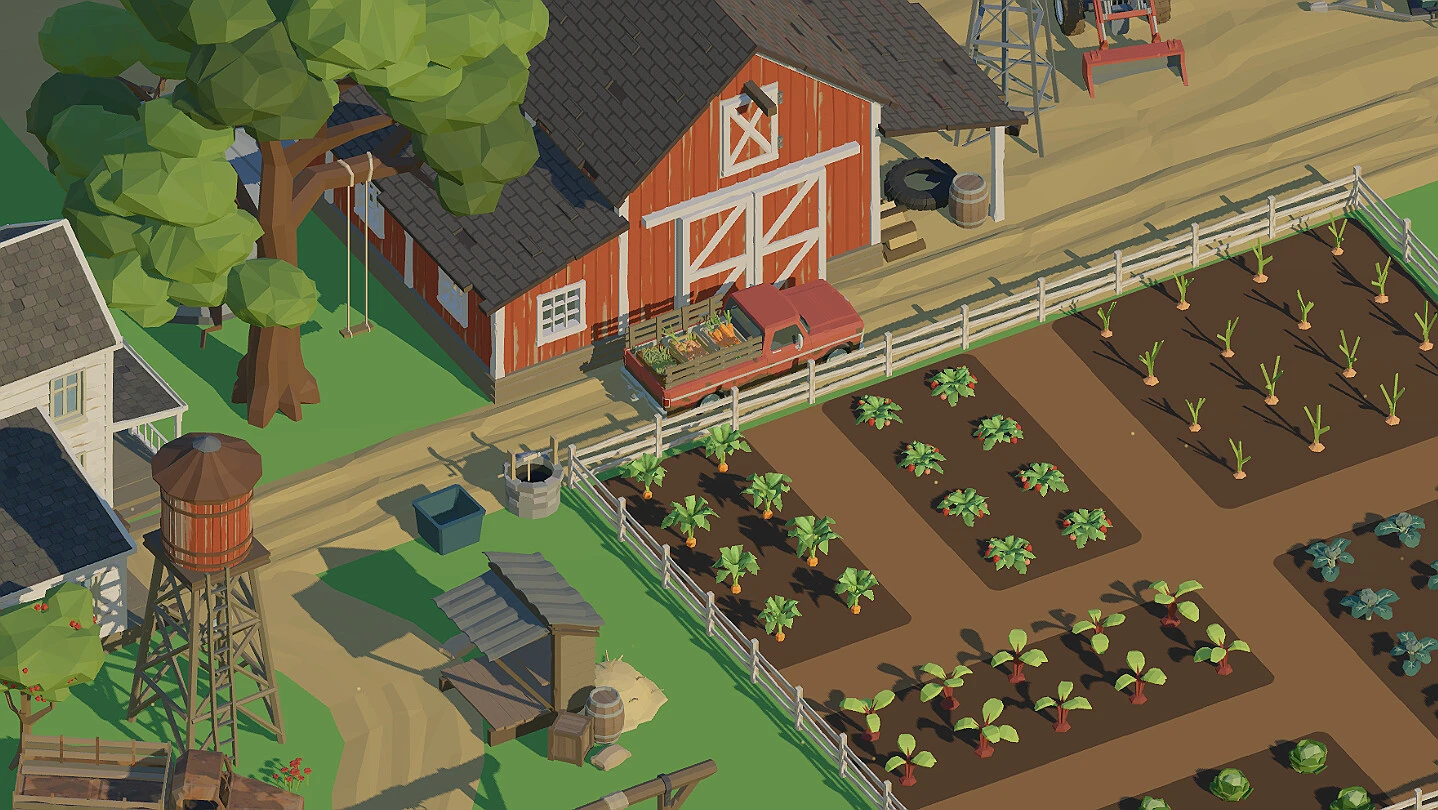
- Farm to Fortune harvest guide: The core loop is plant, grow, harvest, sell, reinvest.
- Fast-cycle crops fund your first upgrades; save high-value crops for later.
- Sell after every harvest to keep cash flowing toward tool upgrades.
- Expand land only when existing plots stay consistently productive.
- Weather awareness helps you plan planting and harvesting around the forecast.
Understanding the Harvest Loop in Farm to Fortune
The harvest loop is the engine of your entire farm in Farm to Fortune. Every credit you earn comes from converting planted seeds into sellable produce, then recycling that income into faster or larger production. Players who master the timing of each stage out-earn those who simply buy whatever is newest in the shop.
The loop has four repeating phases:
| Phase | Action | Key Goal |
|---|---|---|
| Plant | Fill every available plot with affordable crops | No idle plots |
| Grow | Wait out the growth interval, monitor weather | Plan the next cycle |
| Harvest | Collect finished produce promptly | Avoid wasted time |
| Sell and reinvest | Convert produce to funds, buy upgrades | Strengthen the loop |
A steady, repeatable cycle beats a single big purchase. Keep plots producing at all times instead of saving for an expensive upgrade while land sits empty.
Choosing the Right Crops for Each Farm Stage
Crop selection in this harvest guide comes down to balancing growth time against sale value. Fast crops let you reinvest frequently, while slower high-value crops pay more per cycle but lock up your plots and capital.
| Crop Type | Growth Time | Sale Value | Break-Even Speed | Best Stage |
|---|---|---|---|---|
| Fast-cycle | Shortest interval | Lower per unit | Fast | Early game |
| Balanced | Moderate interval | Moderate | Medium | Developing farm |
| High-value | Longest interval | Higher per unit | Slow per cycle | Established farm |
Early Game: Fast Cycles
- Frequent reinvestment
- Builds initial cash flow
- Funds first tool upgrades
Mid Game: Balanced Crops
- Steady production rhythm
- Supports ongoing upgrades
- Moderate capital needs
Late Game: High-Value Crops
- Best use of expanded land
- Tolerates longer waits
- Maximizes plot value
Do not plant high-value, slow crops before your farm has enough plots and reserve funds. Long waits with empty plots stall your entire income loop.
Step-by-Step Harvest Routine
Follow this routine every play session to keep the farm efficient from the first plot to full expansion.
Plant All Available Plots
Use every plot you can afford to seed. Keep a small cash reserve so you are never locked out of the next cycle.
Check Weather Before Scheduling
Review current weather before committing to a long cycle. Favorable conditions are the best window for planting and harvesting.
Harvest Promptly
Return as crops finish and collect immediately. Finished produce sitting in the field earns nothing.
Sell and Reinvest Wisely
Sell the harvest, then put profits into the upgrade that speeds up your most repeated action, not the most expensive option.
Expand When Stable
Buy new land only when current plots stay full and income comfortably covers expansion without interrupting production.
Every purchase should shorten, speed up, or enlarge an action you repeat every cycle. If an upgrade does not touch your routine, defer it.
Selling Strategy and Upgrade Priorities
Selling and upgrading are two halves of the same decision. Selling converts your harvest into spendable funds, while upgrades determine how much the next harvest is worth and how quickly it arrives.
Recommended upgrade order by stage:
| Priority | Upgrade Focus | Buy When | Avoid |
|---|---|---|---|
| Early | Tools and production efficiency | Upgrade reduces repeated effort | Buying several minor upgrades at once |
| Mid | Growth speed and yield | Farm produces consistently | Investing before plots justify it |
| Late | Shop improvements and land | Plots stay full, cash flow stable | Expanding into unused capacity |
If the next major upgrade is close to affordable and your current cycle is stable, holding one harvest's worth of funds is reasonable. Otherwise, keep money working in seeds.
Weather, Milestones, and Session Checklist
Weather shapes your harvest planning window. Use calm or favorable stretches for planting long cycles, and keep short-cycle crops available for busy sessions where you can only check in briefly.
Progression-friendly harvest milestones:
Harvest Session Goals:
- Fill every available plot before ending a session
- Harvest and sell all finished produce
- Complete current farming tasks and objectives
- Reinvest profits into one loop-improving upgrade
- Review shop stock for newly unlocked items
Farm to Fortune supports low-interruption play styles. Short-cycle crops pair well with brief check-ins, while long cycles suit extended away time.
Harvest Guide FAQ
Q: What is the best crop to plant early in Farm to Fortune?
Fast-cycle crops are the strongest early choice. Their short growth intervals let you reinvest quickly, funding your first tool and efficiency upgrades before you commit to slower, higher-value crops.
Q: Should I sell my harvest immediately or save it?
Sell promptly in most cases. Funds sitting as unsold produce cannot buy seeds or upgrades. Holding a harvest only makes sense when you are just short of a major upgrade and your production cycle is already stable.
Q: When should I expand my farmland?
Expand only after your existing plots stay consistently planted and harvested, and your income supports the purchase without interrupting the cycle. New land is a liability until you have the capacity to use it.
Q: Does this Farm to Fortune harvest guide apply to the Demo?
Yes. The free Demo covers the core farming loop, so the same planting, harvesting, selling, and reinvestment principles apply. Full-version progression simply extends the loop with more crops, upgrades, and land.