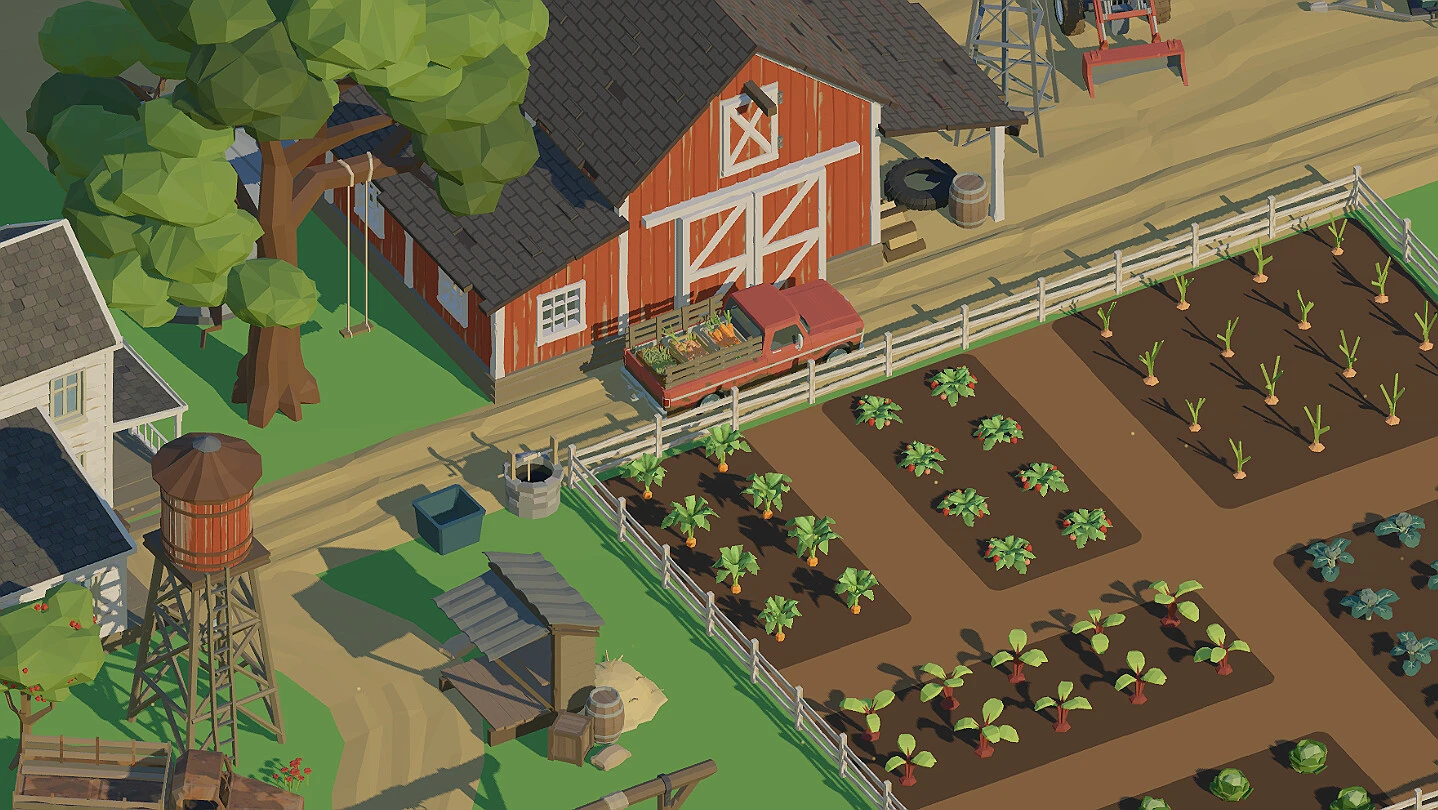
- Farm to Fortune planting guide basics: prepare plots before spending valuable seeds.
- Crop selection should match your current goal, available space, and care capacity.
- Watering priority keeps developing crops healthy when resources are limited.
- Harvest timing matters because mature crops often support the next planting cycle.
- Efficient layouts reduce walking and make routine farm checks easier.
Farm to Fortune planting guide fundamentals
The best planting routine begins before a seed enters the ground. Check your available plots, inspect your seed supply, and decide whether the next harvest is meant for immediate income, progression, crafting, or future expansion. A profitable crop is not always the best crop if it takes too much attention or delays a more important objective.
Start with a small, manageable planting block. This gives you room to learn how growth, watering, harvesting, and plot recovery work without committing every resource at once. Once the cycle feels predictable, expand the layout and reserve space for crops with different growth patterns.
Profit Focus
- Prioritize crops with strong sell value.
- Keep enough supplies for replanting.
- Best when your next goal requires currency.
Progression Focus
- Plant crops tied to current objectives.
- Favor reliable completion over maximum value.
- Useful when unlocking areas or upgrades.
Low-Maintenance Focus
- Choose crops that fit your check-in schedule.
- Avoid filling every plot at once.
- Better for longer sessions between visits.
| Planting priority | Best use | Main advantage | Main risk |
|---|---|---|---|
| High-value crop | Currency goals | Stronger harvest income | May require more attention |
| Fast-growing crop | Short sessions | Quicker harvest feedback | Smaller value per cycle |
| Objective crop | Quests or unlocks | Advances progression directly | May not be the best seller |
| Reliable crop | Learning the system | Easier routine management | Slower farm optimization |
Use a compact test plot first. A controlled planting block makes it easier to identify watering needs, harvest timing, and the value of each crop before expanding.
How to prepare plots and plan your layout
Plot preparation should support the entire farming loop, not only the planting moment. Leave enough walking space to reach each plot quickly, and avoid creating isolated corners that take extra time to inspect. A simple grid is often easier to manage than a decorative layout during early progression.
Group crops according to their purpose. Keep income crops together, place objective crops in a clearly marked area, and leave flexible plots open for experiments or newly unlocked seeds. This organization reduces mistakes when several crop types are ready at different times.
| Layout style | Recommended use | Strength | Limitation |
|---|---|---|---|
| Compact grid | Early progression | Fast checks and easy watering | Less room for decoration |
| Crop zones | Mixed objectives | Separates income and quest crops | Requires initial planning |
| Expansion rows | Growing farms | Easy to extend gradually | Can create longer travel paths |
| Decorative layout | Established farms | Better visual presentation | Less efficient for routine care |
Inspect available space
Count usable plots and identify the shortest route between them. Keep a clear path for watering, harvesting, and replanting.
Assign each plot a purpose
Decide which plots support currency, progression, experimentation, or reserve capacity. Avoid planting valuable seeds without a clear objective.
Group similar crops
Place crops with similar care requirements together. This makes daily checks faster and lowers the chance of missing a developing plant.
Leave expansion room
Keep at least one flexible area available for new seeds, future upgrades, or a crop that becomes important later.
A strong layout is easy to understand at a glance. If you cannot quickly tell which crops need attention, the farm is already costing more time than necessary. Use consistent rows, clear paths, and a repeatable inspection route.
Do not fill every available plot simply because space is available. More crops create more care obligations, and missed maintenance can reduce the value of the entire cycle.
Choosing crops for each farming goal
Crop choice should follow your current objective rather than a universal ranking. A crop that looks attractive because of its sale value may be inefficient if it matures slowly, requires frequent attention, or consumes supplies needed elsewhere.
Use a three-question check before planting:
- Does this crop support the goal I am working toward?
- Can I provide its required care during the growth cycle?
- Will the harvest leave enough resources for the next action?
Currency
Select crops with a useful return after replanting costs and routine expenses.
Quests
Reserve plots for crops required by active objectives or unlock conditions.
Crafting
Maintain a dependable supply of crops used in recipes, upgrades, or processing.
Testing
Use a small number of plots to learn an unfamiliar crop before scaling it.
| Goal | Selection signal | Planting approach | When to switch |
|---|---|---|---|
| Earn currency | Favorable harvest value | Use a dedicated income zone | Switch when a better goal appears |
| Complete objectives | Listed requirement | Plant only the needed amount first | Replant after the objective is secure |
| Build supplies | Repeatable demand | Keep a steady reserve plot | Expand when stock begins falling |
| Learn a new crop | Unknown care pattern | Test one small group | Scale after a successful cycle |
Do not judge a crop from one harvest alone. Consider the full loop: seed cost, plot use, care time, harvest value, and what the crop enables afterward. A slightly lower-value crop may be stronger for your account if it keeps your routine stable and supports frequent reinvestment.
When a crop is unfamiliar, plant a small batch first. Scale it only after you understand its care pattern and confirm that the harvest supports your current objective.
Watering, maintenance, and harvest timing
Maintenance is where many planting plans lose efficiency. The goal is not to check the farm constantly; it is to create a routine that matches the crops you planted. Begin each visit with a quick scan, then address the plots that are closest to an important growth or harvest point.
Prioritize actions in this order:
- Handle crops that are ready to harvest.
- Restore care to plants showing an immediate need.
- Replant empty plots connected to your current objective.
- Inspect the remaining crops and prepare for the next visit.
| Maintenance task | Priority | Practical reason |
|---|---|---|
| Harvest ready crops | Highest | Frees plots and secures available value |
| Water or restore care | High | Protects developing crops from being neglected |
| Replant empty plots | Medium | Keeps productive space active |
| Rearrange layout | Low | Improves efficiency but can wait |
| Decorative changes | Optional | Does not usually improve the current cycle |
Harvesting should be part of the next planting decision. Before selling or processing everything, reserve enough resources for the next cycle. If a harvest is needed for an objective, separate it immediately instead of mixing it with general inventory.
A useful routine is to check the farm at the same points during each play session. For example, inspect before starting other tasks, revisit after completing a major objective, and perform a final harvest check before leaving. The exact schedule can change, but consistency makes missed crops less likely.
Planting and Maintenance Checklist:
- Confirm the next farming objective
- Check seed supply and available plots
- Plant crops in clearly grouped zones
- Maintain crops according to their care needs
- Reserve enough harvest for replanting or objectives
Before collecting a mature crop, know whether it is meant for selling, crafting, an objective, or replanting. Sorting its purpose first prevents avoidable resource shortages.
Improving your farm cycle
Once your basic routine is reliable, improve one part of the cycle at a time. Expanding plots, changing crop choices, and redesigning paths simultaneously makes it difficult to identify which decision helped. Controlled improvements create a clearer progression path.
Start by reducing wasted movement. Then adjust crop ratios, improve your reserve supply, and test whether a larger planting block remains manageable. Efficiency is valuable only when it remains sustainable across several visits.
| Upgrade focus | Question to ask | Expected improvement |
|---|---|---|
| Plot capacity | Can I care for more crops consistently? | Higher output without neglected plots |
| Travel route | Are any plots difficult to reach? | Faster inspection and harvesting |
| Crop ratio | Are too many plots serving one purpose? | Better balance between income and progression |
| Reserve stock | Can I replant after a weak harvest? | More stable future cycles |
| Farm organization | Can I identify priorities instantly? | Fewer missed tasks and mistakes |
Use the following progression pattern:
- Stabilize: Build a dependable routine with manageable crop quantities.
- Specialize: Assign zones for income, objectives, and supplies.
- Expand: Add plots only when existing areas are being maintained consistently.
- Optimize: Replace inefficient crops and shorten unnecessary travel.
- Review: Reassess the layout whenever new content changes your priorities.
The strongest farm is not necessarily the largest one. A smaller farm that receives regular care can outperform a larger farm filled with neglected crops. Treat expansion as a responsibility increase, not an automatic upgrade.
Change one variable between planting cycles. A single layout or crop adjustment provides clearer feedback than rebuilding the entire farm at once.
Farm to Fortune planting guide FAQ
Q: What should beginners plant first in Farm to Fortune?
Begin with a manageable crop group that matches your current objective and care schedule. Reliable crops are usually better for learning than filling every plot with an unfamiliar option.
Q: Should I prioritize profit or quest crops?
Follow the goal that unlocks your next meaningful improvement. Use a dedicated portion of the farm for objective crops while keeping enough space for income or essential supplies.
Q: How can I make watering and harvesting more efficient?
Group crops with similar care needs, keep paths clear, and inspect the farm using the same route each visit. A consistent layout reduces missed plots and unnecessary movement.
Q: When should I expand my farm?
Expand after you can maintain your current plots consistently and still have enough resources for replanting. More capacity is useful only when the added crops fit your routine.
The central principle of this Farm to Fortune planting guide is simple: plant with a purpose, maintain a repeatable routine, and expand only when your current cycle is stable. Crop value matters, but planning, care, and resource reserves determine whether that value becomes lasting progress.
Build a farm you can manage reliably. Clear zones, deliberate crop choices, and consistent harvest planning will support stronger progress than uncontrolled expansion.