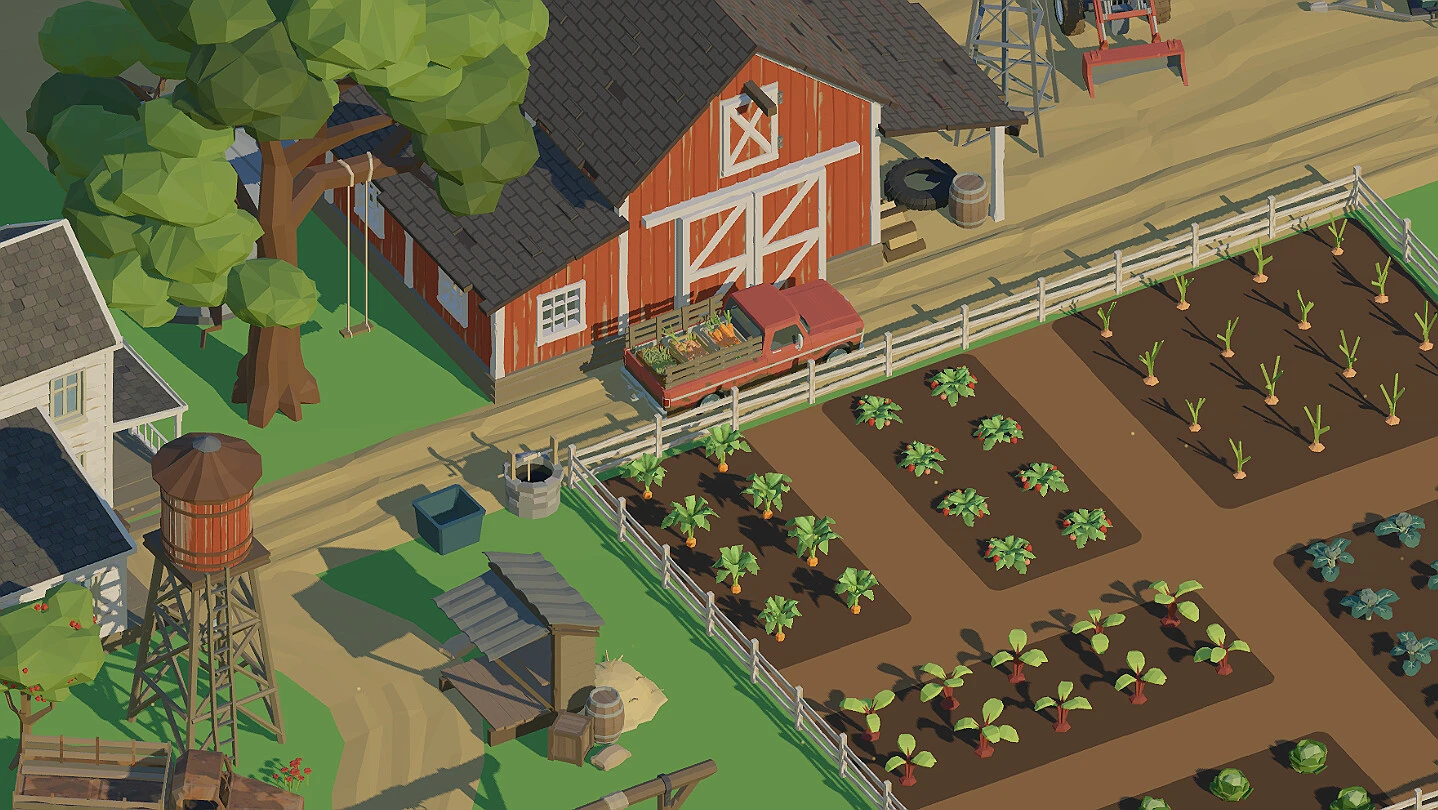
- Farm to Fortune centers on planting, harvesting, selling, and reinvesting earnings.
- Early priority: Keep available farmland productive without spending your entire balance.
- Best upgrades: Favor improvements that affect repeated farming actions.
- Expansion rule: Add land after your current plots support stable income.
- Current reference: Check the official Steam listing for release and Demo information.
Farm to Fortune Farming Simulator Basics
Farm to Fortune farming simulator gameplay follows a repeatable production cycle: prepare available farmland, plant crops, wait for growth, harvest the results, sell the produce, and use the proceeds to improve the operation. The strongest beginner strategy is not to rush toward every available purchase. Instead, build a reliable income loop that keeps your plots active and leaves enough currency for the next useful decision.
The game is developed by Ctrl Alt Defeat and published by Delayed Victory. The Steam version launched on October 30, 2026, and a free Demo is available through a separate Steam listing. Use the official Farm to Fortune Steam page for current store details, supported languages, and release information.
Production Cycle
- Plant affordable crops
- Maintain active plots
- Harvest when growth is complete
- Sell produce to restore working funds
Money Management
- Keep a reserve for the next cycle
- Reinvest in repeated activities
- Delay expansion until income is stable
- Compare usefulness before buying
Progression Focus
- Complete early objectives
- Check shop availability
- Improve tools and efficiency
- Add farmland when capacity supports it
| Stage | Main Goal | Recommended Focus |
|---|---|---|
| Starting farm | Learn the basic loop | Use available plots and avoid oversized purchases |
| Developing farm | Build repeatable income | Reinvest in useful tools and production improvements |
| Expanding farm | Increase capacity | Add land only when existing plots are consistently active |
| Established farm | Improve efficiency | Balance crop timing, upgrades, shop purchases, and objectives |
Treat every early purchase as part of the next production cycle. An upgrade is more valuable when it improves actions you perform repeatedly across the farm.
Step-by-Step Beginner Farming Route
Follow this route when starting a new farm. It is designed around the confirmed progression structure rather than unverified crop prices, growth timers, or hidden rewards.
Use the Starting Farmland
Begin with the plots already available. Plant crops that fit your current funds and leave enough currency for the next stage of the farming cycle. The opening goal is to establish production, not to purchase every option immediately.
Keep the Farm Active
Check available plots regularly and avoid leaving usable farmland idle. A consistent planting routine gives you more opportunities to harvest, sell produce, and build funds for the next improvement.
Harvest and Sell the Produce
When crops are ready, harvest them and sell the results through the available shop or selling system. Selling converts completed work into usable currency for production, tools, objectives, and later expansion.
Buy the Most Repeatedly Useful Upgrade
Compare available improvements and choose the one that supports your normal routine. Tool efficiency, production speed, yield, or similar improvements can be more useful than a purchase that only helps an occasional action.
Expand After Cash Flow Stabilizes
Unlock additional farmland after your current plots are being used consistently. Expansion is strongest when you have enough funds and production capacity to put the new space to work soon after purchasing it.
The route can be adjusted when tasks introduce a specific requirement. If an objective asks for a particular purchase or production action, complete that requirement without abandoning the wider income cycle.
| Action | Why It Matters | Common Mistake |
|---|---|---|
| Plant available crops | Starts the income cycle | Spending all starting currency first |
| Check growth progress | Prevents unused farmland | Ignoring plots after the first planting |
| Harvest ready crops | Converts time into inventory | Delaying collection when funds are needed |
| Sell produce | Funds upgrades and expansion | Saving every item without a clear purpose |
| Reinvest earnings | Improves future cycles | Buying unrelated upgrades too early |
New land can increase potential output, but unused capacity does not create income by itself. Expand only when your current funds, tools, and production routine can support the additional plots.
Crop Planning and Farm Economy
Farm to Fortune rewards flexible crop planning rather than one universal choice for every stage. The supplied game information does not confirm a complete crop database with fixed names, prices, or growth timers, so avoid treating unverified values as permanent facts. Instead, compare crops by production speed, sale value, and how well they fit your current cash flow.
Fast-cycle crops are generally useful when you need frequent selling opportunities and quick reinvestment. Balanced options can support a developing operation, while higher-value crops may become more practical once the farm has enough space and funds to wait through longer production cycles.
| Crop Strategy | Production Pattern | Best Use | Main Trade-Off |
|---|---|---|---|
| Fast cycle | Shorter wait, quicker sales | Early cash flow and frequent reinvestment | Lower value per individual sale may require more activity |
| Balanced cycle | Moderate wait and value | Developing farms with regular upgrades | Less specialized for speed or large payouts |
| High value | Longer wait, larger individual sale | Established farms with spare capacity | Slower access to funds between harvests |
Use the following questions before choosing what to plant:
- How long can the farm operate before needing another sale?
- Do you need currency for a nearby upgrade or task?
- Are all available plots already being used?
- Can your current tools support additional production?
- Would a slower crop leave the farm short on working funds?
A strong economy balances short-term liquidity with long-term value. Fast returns can help fund early improvements, but larger farms may benefit from combining different production timelines. The exact balance should follow the growth times and sale values displayed in your current game version.
Choose crops by purpose. Use faster production when you need funds soon, and consider longer cycles only when your farm can comfortably wait for the next sale.
Upgrade Priorities and Land Expansion
Upgrade planning should follow the parts of the farm you use most often. Improvements that affect planting, harvesting, production speed, yield, or general efficiency can provide repeated value. Shop improvements and land expansion become more attractive after the basic farming loop is already reliable.
Do not assume that the most expensive option is automatically the best purchase. Compare the cost with the number of cycles it will influence and whether the improvement solves a current bottleneck.
| Upgrade Area | Suggested Timing | Practical Question |
|---|---|---|
| Tools | Early to mid progression | Does this improve an action used during most cycles? |
| Production efficiency | Early progression | Will it reduce downtime or repeated effort? |
| Growth speed | Developing farm | Do enough active plots exist to benefit from faster cycles? |
| Yield improvements | Developing farm | Will additional output support current spending goals? |
| Land expansion | After stable income | Can the new plots be used without exhausting funds? |
| Shop improvements | Mid to late progression | Does the purchase support current production and objectives? |
Use this priority order as a flexible framework:
- Improve the actions repeated during every farming cycle.
- Maintain enough currency to continue planting.
- Support the production capacity you already own.
- Purchase growth or yield improvements when enough plots can benefit.
- Expand land after existing production is stable.
- Revisit shop options as new progression milestones appear.
The game’s progression outline also connects shop access, tool upgrades, and land expansion. Check the shop as new objectives become available, but match each purchase to the farm’s immediate needs instead of buying purely because an item is unlocked.
Before purchasing, ask whether the improvement increases output, reduces downtime, or supports an objective you are actively pursuing. If it does none of these, saving for a more useful upgrade may be better.
Progression Checklist and Long-Term Goals
The main progression path moves from a starting plot toward a larger, more productive operation. Early objectives teach the farming loop, while later milestones encourage shop use, tool improvement, and land expansion. Track these goals during normal play rather than waiting until the end of a progression stage.
Core Farm Milestones:
- Use the starting farmland and complete the opening objectives
- Establish a repeatable planting, harvesting, and selling routine
- Keep available plots productive during normal progression
- Purchase useful shop or tool improvements
- Unlock and use additional farmland when income is stable
| Progression Milestone | What to Track | When to Review |
|---|---|---|
| Opening objectives | Starting plots, first crops, early tasks | After each initial harvest |
| Repeatable routine | Active farmland and available funds | Before every major purchase |
| Shop progression | Useful items and current objectives | Whenever new options unlock |
| Tool improvement | Efficiency gains and repeated actions | Before expanding production |
| Land expansion | Cost, available funds, and plot usage | After stable income is established |
For achievement planning, follow ordinary farm progression first. The supplied planning data identifies broad milestones involving early farming, crop production, shop and upgrade progress, and land expansion. Exact Steam achievement names and hidden conditions should be verified on the current Steam achievements page before using them as a definitive checklist.
Review your goals after each harvest cycle. This keeps routine farming, shop purchases, upgrades, and expansion moving together instead of treating them as separate tasks.
Q: What is the main gameplay loop in Farm to Fortune?
The core loop is to plant crops, wait for growth, harvest the results, sell the produce, and reinvest the earnings into tools, production, shop improvements, or additional farmland.
Q: What should beginners buy first?
Prioritize improvements that affect repeated farming actions, such as tool efficiency or production improvements. Keep enough currency for the next planting cycle before committing to expansion.
Q: When should I expand my farm?
Expand after your current plots are being used consistently and your income can support additional space. New land is most useful when you have enough funds and capacity to put it into production.
Q: Does Farm to Fortune have a Demo?
Yes. A separate Farm to Fortune Demo listing is available through Steam. Check the current Demo page and the main store listing for availability and version details.