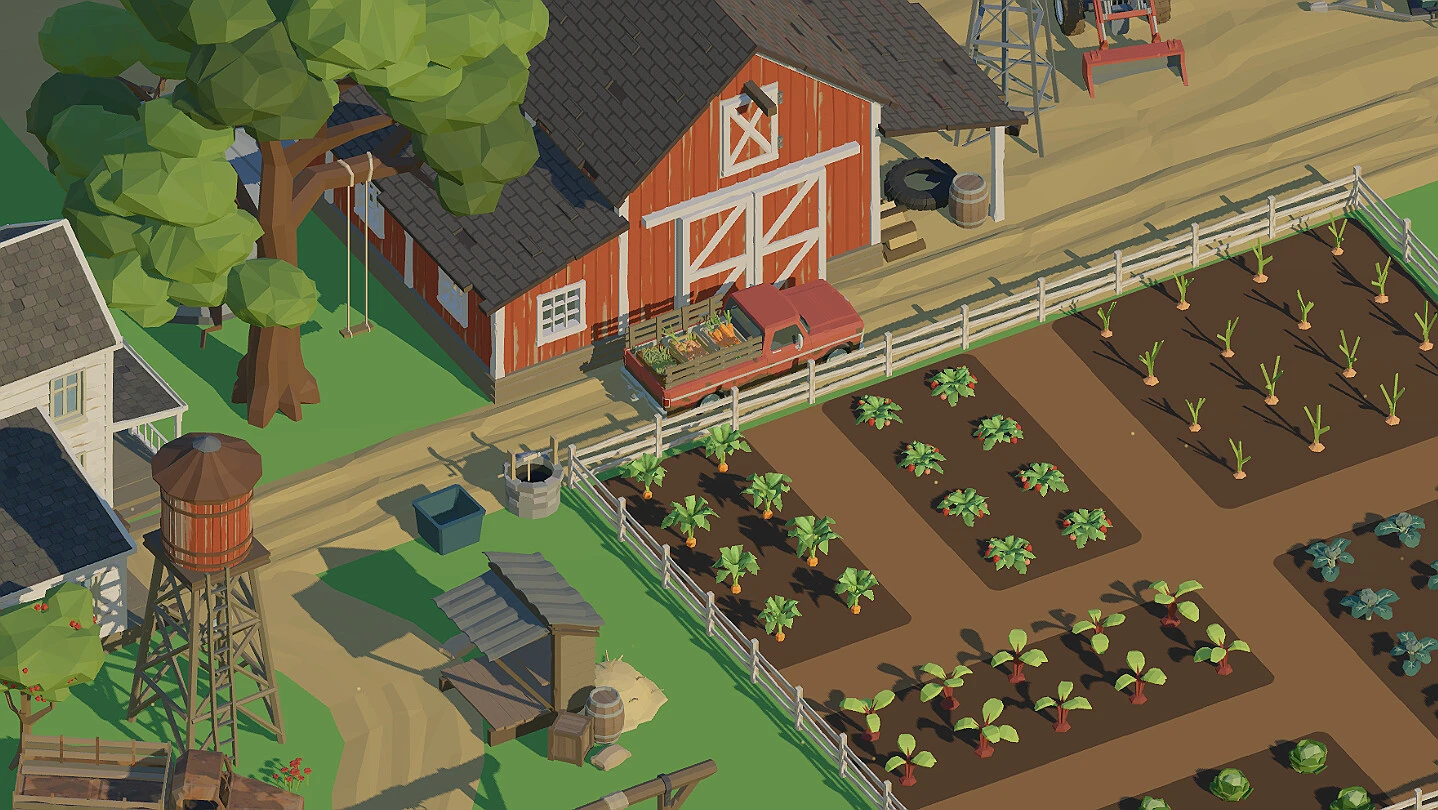
- Farm to Fortune game rewards a steady loop of planting, watering, harvesting, and selling.
- Early priority: unlock wheat, improve tool speed, and expand reliable selling capacity.
- Best routine: keep fields growing while another batch moves through the farm stand.
- Upgrade focus: sales price, faster tools, larger stalls, and longer-lasting soil support progression.
- Long-term plan: use trees for passive income while reserving open plots for crop orders.
Farm to Fortune game: Core Progression Loop
The central rhythm of Farm to Fortune game is easy to understand but becomes more efficient when each action supports the next one. Prepare a plot, plant a crop, water it, harvest the result, and place the produce into a farm stand. Coins from sales then fund seeds, upgrades, equipment, trees, and additional land.
The opening progression is intentionally relaxed. Grass introduces planting and selling, while wheat adds a more valuable crop and begins the first meaningful decisions about time, storage, and field space. Later unlocks include carrots, strawberries, onions, fruit trees, tomatoes, compost, delivery orders, and additional farm plots.
Video Highlights:
- The opening cycle covers field preparation, planting, watering, harvesting, and selling.
- Wheat becomes available after the first early progression milestone.
- Farm stands sell plants one at a time, with a visible timer for the next sale.
- Upgrades improve tool speed, sales price, yield, stall capacity, and field efficiency.
- Trees and delivery orders create additional income paths beyond standard crop sales.
| Progression Stage | Main Activity | Practical Objective |
|---|---|---|
| Opening field | Clear debris and prepare soil | Establish a repeatable planting space |
| First harvest | Grow and sell grass | Build initial coins and experience |
| Wheat phase | Plant wheat and expand selling | Increase value per growing cycle |
| Mixed crops | Add carrots, strawberries, and onions | Balance quick income with larger payouts |
| Advanced farm | Use trees, compost, orders, and new plots | Diversify production and reduce idle time |
Treat the farm stand as part of the production cycle, not as a final step. Start selling one batch while preparing the next field so your coins continue moving through the farm.
The demonstrated farm stand requires plants to be moved from storage into empty stall slots. Each slot sells one plant after another, and unsold offers can be removed and returned to storage. This makes stall capacity important: a full harvest can create a queue, while a small stall can leave valuable crops waiting in storage.
A useful early habit is to harvest before purchasing the next seed pack whenever funds are tight. The extra sale can unlock the next purchase without forcing you to delay planting. Rain can also reduce watering work, although keeping track of soil condition remains important when several crops are growing at once.
Step-by-Step Farming Setup
A strong early setup does not require a perfect layout. It requires a predictable sequence that keeps the character, tools, fields, and selling area working in the correct order. The following process follows the mechanics demonstrated during early progression.
Clear and Prepare the Plot
Use the hoe to remove debris and create usable ground. Keep the first planting area compact so watering, harvesting, and replanting require less movement. When a new section becomes available, prepare only the space you can actively manage.
Plant a Manageable Crop Mix
Begin with grass, then add wheat as soon as it becomes available. Avoid spending every coin on seeds at once. Keeping a small reserve lets you respond to new unlocks, tool needs, or delivery requests.
Water Before Switching Tasks
Water each planted space, then move directly to harvesting or selling. The demonstrated run shows that rain can cover some watering needs, while soil-related upgrades can extend how long fields remain wet.
Harvest and Queue the Farm Stand
Move harvested plants into storage or directly into open stall slots. Check the selling timer before adding another crop so you understand whether the stall is full, active, or waiting for the next item.
Reinvest Only After the Next Cycle Is Secure
Use early earnings for seeds and upgrades that improve the next cycle. Sales price, faster hand tools, double-yield chances, and stall capacity all become more useful when your farm can keep producing consistently.
| Action | Why It Matters | Common Mistake |
|---|---|---|
| Clear debris | Opens usable field space | Expanding before the first plot is efficient |
| Plant | Starts crop growth | Buying too many seeds before confirming cash flow |
| Water | Keeps crops progressing | Forgetting a field while managing sales |
| Harvest | Converts growth into inventory | Leaving finished crops in the field |
| Sell | Generates coins and experience | Filling the stall without checking capacity |
| Upgrade | Improves future cycles | Choosing expensive upgrades before building income |
Additional land is useful only when you can plant, water, harvest, and sell from it. A larger farm can increase travel and maintenance if purchased before your core cycle is stable.
The most important early decision is not which crop looks most valuable. It is whether the crop fits the current pace of your farm. A slower crop may produce a better sale, but a faster crop can keep the farm stand active and provide the coins needed for the next upgrade.
Crop Values, Timing, and Selling Priorities
The available information shows several useful reference points from the demonstrated run. These values should be treated as in-game observations from that progression path rather than universal guarantees for every future balance update.
Grass is used as an accessible opening crop. Wheat introduces a stronger income option, while carrots and strawberries add longer growth windows and more variety. Trees require more space and investment but can provide a less hands-on source of produce once established.
| Crop or Produce | Observed Detail | Best Early Use |
|---|---|---|
| Grass | Demonstrated sale of 5 coins per plant | Opening sales and order fulfillment |
| Wheat | 18-second growth, 18 sale price, 36 experience shown | Balanced progression and experience |
| Carrots | Unlocked after early wheat progression | Add variety when wheat income is stable |
| Strawberries | 35-second growth shown | Higher-value rotation during active farming |
| Onions | Used in a delivery request | Reserve some for special orders |
| Apples | Produced by fruit trees | Passive or low-maintenance side income |
| Cherries | Unlocked later with additional trees | Expand tree-based production |
The farm stand changes the value of timing. If a crop takes longer to grow than the stall takes to sell, you may experience downtime unless another crop is ready. Conversely, if the farm produces faster than the stall can process, storage and capacity become the limiting factors.
A practical rotation is to keep at least one quick-growing crop available while longer crops mature. Use the quick crop to maintain sales activity, then place the larger harvest into the stand when enough slots are open. This approach also protects you from spending all available inventory on a delivery order.
Fast Rotation
- Use grass or another quick crop
- Keeps selling active
- Helpful when saving for seeds
Balanced Rotation
- Combine wheat with carrots
- Supports steady experience
- Leaves room for order requests
Passive Support
- Add fruit trees after expansion
- Requires less field attention
- Reserve open plots for active crops
Keep a portion of your inventory flexible. Selling every plant immediately can leave you unable to satisfy a high-value delivery request or maintain a useful crop rotation.
Delivery trucks add a separate decision layer. In the demonstrated progression, an order requested onions and grass and offered 3,095 coins. The same run also described a delivery order paying one and a half times the market price. Because orders can demand specific crops, it is sensible to keep a small reserve of common plants instead of selling the entire harvest automatically.
Upgrade Priorities and Farm Layout
Upgrades are most effective when they remove a bottleneck you already feel. If planting and watering take too long, tool speed has immediate value. If crops are ready but the farm stand is slow or too small, sales speed and stall capacity become stronger choices. If fields dry before you return, longer-lasting moisture improves consistency.
| Upgrade Focus | Demonstrated Benefit | When to Prioritize |
|---|---|---|
| Tool speed | Hand tools work faster | Field maintenance feels slow |
| Sales price | Raises income from sales | You have steady crops entering the stand |
| Double yield | Chance to receive extra produce | You can maintain regular harvesting |
| Soil moisture | Fields stay wet longer | Watering interrupts your crop cycle |
| Sales speed | Reduces stall waiting time | Storage is filling faster than sales |
| Stall capacity | Holds more items for sale | Finished crops are waiting in storage |
| Compost growth | Fertilized crops grow twice as fast while active | You have enough plant waste to support it |
| Additional plot | Expands production space | Existing fields are consistently productive |
The early upgrade path shown in the progression includes faster hand tools, sales price improvements, double-yield potential, longer-lasting wet soil, additional stall space, and faster selling. None of these choices is automatically correct in every moment. The best selection depends on the current restriction.
Use this simple rule:
- Slow actions call for tool-speed improvements.
- Low income calls for sales-price improvements.
- Full storage calls for sales speed or stall capacity.
- Frequent watering calls for moisture duration or watering capacity.
- Idle fields call for more land or stronger growth effects.
- Plant waste available makes the composter more attractive.
Compost deserves special attention because it changes the pace of a selected area. The demonstrated run describes a composter that turns plant waste into compost, with the shovel spreading it so crops grow twice as fast while the effect lasts. This is most useful when applied to crops you plan to harvest soon, not to every field without considering the timing.
Core Farm Progress Checklist:
- Clear the opening plot and complete the first grass cycle
- Unlock wheat and keep a reserve of coins for seed purchases
- Upgrade at least one tool or sales-related bottleneck
- Add carrots, strawberries, onions, or trees as the farm expands
- Keep common crops available for delivery truck orders
- Use compost on a crop cycle that benefits from faster growth
Place active field crops where they are easy to water and harvest. Keep trees toward the edge or in a dedicated row so their size does not block access to the main production plot.
A mixed layout is usually easier to manage than a single-purpose farm. Use one compact area for active crops, one side row for trees, and enough open access around the farm stand to move produce efficiently. This arrangement supports both active farming and passive income without requiring every space to be managed simultaneously.
Efficient Income Strategy for 2026
The most reliable income strategy is a loop rather than a single crop choice. Plant crops that match the time you can spend managing the farm, keep the stand active, and reinvest profits into the bottleneck that currently slows you down.
During an active session, start with field preparation and planting. Water the crops, then check storage and the farm stand. If a crop finishes while another batch is selling, harvest it and either queue it for sale or hold it for an upcoming order. This avoids long periods where the farm is producing nothing.
During a relaxed session, trees become more appealing because they can provide produce without occupying every active field slot. However, trees still require space and an initial investment, so they should complement rather than replace the crop cycle too early.
| Farm Situation | Recommended Response | Reason |
|---|---|---|
| Few coins | Sell the current harvest, then buy a modest seed pack | Protects the next cycle from overspending |
| Crops ready, stall full | Improve capacity or wait for sales to complete | Prevents inventory congestion |
| Watering feels repetitive | Use moisture upgrades and watch for rain | Reduces maintenance interruptions |
| Orders request common crops | Reserve grass, wheat, onions, or similar basics | Keeps delivery options open |
| Trees block field access | Move future trees into a dedicated row | Improves visibility and movement |
| Plant waste is accumulating | Feed the composter and target a productive crop | Converts waste into faster growth |
| Growth is faster than selling | Improve sales speed or add capacity | Keeps harvest and sales better aligned |
The delivery truck can be a major income opportunity when its requested plants are already available. Before accepting the value of an order, check whether fulfilling it will remove the crops needed for your next planting cycle. A large payout is less useful if it leaves the farm without seeds, inventory, or a way to continue production.
A good end-of-session routine is:
- Harvest all finished crops.
- Put appropriate plants into the farm stand.
- Check whether a delivery order is still active.
- Refill seeds without spending the entire balance.
- Water any remaining crops unless rain is handling the work.
- Review the next upgrade and save toward it.
Think in terms of throughput: how quickly your farm turns seeds, water, time, and field space into coins. The best upgrade is usually the one that improves the slowest part of that chain.
This approach keeps the farm flexible as new crops and systems appear. It also reduces wasted movement, prevents accidental overspending, and makes it easier to respond when the game introduces new orders, equipment, plots, or tree types.
Farm to Fortune game FAQ
Q: What is the main gameplay loop in Farm to Fortune game?
The main loop is to prepare soil, plant seeds, water crops, harvest produce, place it into a farm stand, earn coins, and reinvest those coins into seeds, upgrades, trees, equipment, and additional plots.
Q: Which upgrade should I choose first?
Choose the upgrade that addresses your current bottleneck. Tool speed helps when field work is slow, sales price helps when income is low, and stall capacity or sales speed helps when harvested crops are waiting to be sold.
Q: Should I buy trees early?
Trees can provide useful side income, but they require space and an initial investment. Build a stable crop-and-selling cycle first, then place trees in a dedicated row where they will not block active fields.
Q: How should I handle delivery truck orders?
Keep a small reserve of common crops, check the requested items before selling everything, and compare the order payout with the value of using those plants for your next planting cycle.
Delivery requests and new unlocks can change what you need next. Review storage, seeds, and active orders before emptying the farm stand or spending your full coin balance.
Farm to Fortune is easiest to manage when every action supports the next one. Keep fields productive, keep sales moving, and choose upgrades based on the farm’s current restriction. With that structure, the progression from grass and wheat to mixed crops, trees, compost, delivery orders, and expanded plots becomes much more manageable.