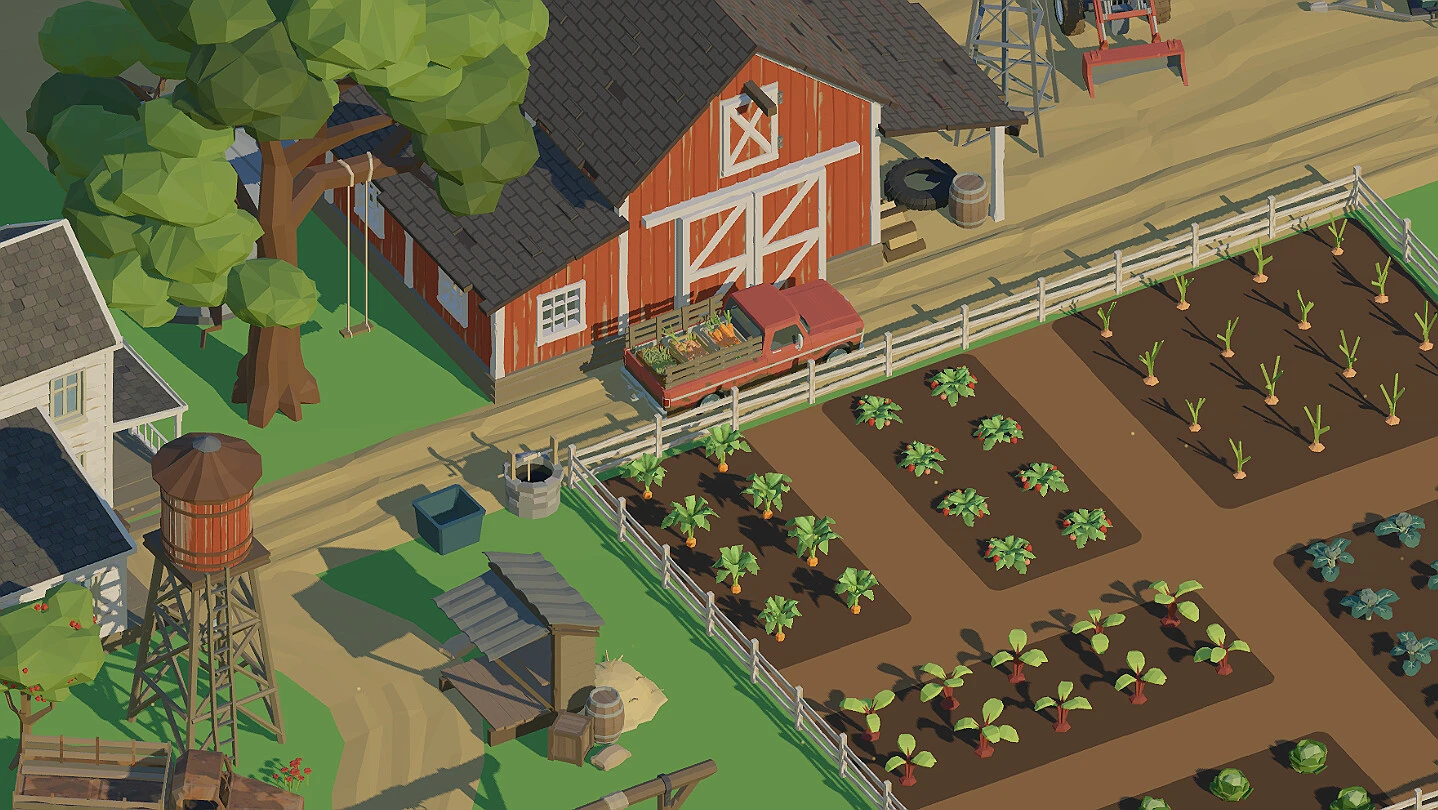
- Farm to Fortune best strategy: Build a repeatable cycle of production, selling, reinvestment, and expansion.
- Early priority: Improve dependable income before chasing expensive upgrades or decorative purchases.
- Resource rule: Keep enough stock for the next production cycle instead of selling every item immediately.
- Upgrade focus: Choose upgrades that increase output, reduce downtime, or improve selling efficiency.
- Long-term goal: Turn each profitable cycle into stronger future production rather than short-term spending.
Farm to Fortune Best Strategy Framework
Farm to Fortune best strategy starts with a simple idea: every action should improve either production speed, product value, or future earning capacity. A strong farm is not built by selling everything at the first opportunity. It grows through a controlled loop that protects working resources while steadily increasing profit.
Use three questions before making a major decision:
- Does this purchase create more income?
- Does it reduce waiting, travel, or production downtime?
- Will it help the next several cycles rather than only the current sale?
If the answer is unclear, delay the purchase. Cash on hand is useful, but productive assets are usually more valuable when they support a repeatable income route.
Production First
- Maintain a reliable supply of sellable goods
- Avoid long idle periods
- Expand only when current output is under control
Value Management
- Compare input cost with expected sale value
- Reserve materials for the next cycle
- Sell surplus instead of essential stock
Controlled Growth
- Reinvest profits into useful improvements
- Keep an emergency cash reserve
- Delay luxury spending until income is stable
The most reliable approach is to create a short production loop first. Once that loop works consistently, add one improvement at a time. This makes it easier to identify which purchase actually improves your results.
| Strategy Area | Main Objective | Common Mistake | Better Approach |
|---|---|---|---|
| Production | Keep goods moving | Starting too many activities | Focus on the most dependable output |
| Selling | Convert surplus into cash | Selling all inventory | Preserve materials for the next cycle |
| Upgrades | Increase future earnings | Buying based on price alone | Measure output, time, and repeat value |
| Expansion | Add productive capacity | Expanding before demand is stable | Grow after the current loop is profitable |
Treat each farm cycle as an experiment. Change one major variable at a time so you can see whether a new plot, tool, building, or production choice actually improves your earnings.
Step-by-Step Farm Progression
The best opening route is deliberately conservative. Your first objective is not maximum size; it is a dependable income pattern that can fund the next improvement without leaving the farm unable to operate.
Secure a Basic Production Loop
Begin with the activities that require the fewest inputs and have the clearest path to sale. Keep the process simple enough to repeat without exhausting your available resources.
Track Inputs and Returns
Record what each cycle consumes and what it produces. Compare the cost of seeds, feed, materials, or processing against the final value. Use this information to identify your most dependable source of profit.
Protect Working Inventory
Before selling, reserve the materials needed to restart production. A profitable sale that prevents the next cycle can slow progress instead of helping it.
Buy One Productivity Upgrade
Choose an upgrade that improves speed, capacity, yield, or convenience. Avoid purchasing several expensive improvements at once because that can make it difficult to identify which one creates value.
Repeat Before Expanding
Run the improved cycle several times. If it remains profitable and manageable, use the extra income to expand production or unlock the next efficiency improvement.
This progression works because it creates a clear decision boundary. You expand only after the existing operation can support itself. That reduces the risk of holding too many unfinished goods, running short on inputs, or spending all available cash on capacity that cannot yet be used.
| Progress Stage | Primary Goal | Spend On | Avoid |
|---|---|---|---|
| Opening | Establish income | Basic production needs | Decorative purchases |
| Stabilization | Repeat profitable cycles | Small efficiency upgrades | Multiple untested upgrades |
| Growth | Increase useful output | Capacity and speed | Expansion without demand |
| Optimization | Improve profit per cycle | High-value improvements | Low-impact convenience items |
| Mature Farm | Maintain flexibility | Reserves and selective expansion | Spending every surplus coin |
A larger operation is not automatically a better operation. If new capacity increases input costs, travel time, or management demands faster than it increases revenue, wait and strengthen the existing cycle first.
Resource and Gold Management
A strong farm economy depends on separating money into different purposes. If every coin is treated as spendable, one unexpected cost can interrupt production. Use a simple three-part budget:
- Operating funds cover the next production cycle.
- Growth funds pay for upgrades and expansion.
- Reserve funds protect the farm from delays, mistakes, or unexpected requirements.
The exact split can change as your farm develops, but the principle remains useful. Early progress should favor operating stability. Later progress can move more of the surplus toward growth.
| Resource Type | Keep Available For | Priority | Selling Rule |
|---|---|---|---|
| Core inputs | Restarting production | High | Sell only the surplus |
| Finished goods | Immediate income or processing | Medium | Sell when the next cycle is secured |
| Cash reserve | Unexpected costs | High | Do not spend on low-impact items |
| Expansion materials | Planned upgrades | Medium | Hold if the upgrade is near |
| Luxury items | Optional purchases | Low | Buy after income is stable |
When comparing two production options, do not judge them only by their final sale price. A lower-value item may be better if it requires fewer inputs, finishes faster, or can be produced consistently. A higher-value item may be attractive but inefficient if it ties up resources for too long.
Use this practical comparison:
| Measure | Question | Why It Matters |
|---|---|---|
| Net value | What remains after input costs? | Shows actual profit |
| Cycle time | How long until the item can be sold? | Helps compare income speed |
| Input burden | How many resources are consumed? | Reveals sustainability |
| Management cost | How much attention does it require? | Protects against idle time |
| Repeatability | Can the cycle be started again easily? | Supports steady growth |
A useful habit is to review your farm after every completed cycle. Identify what sold quickly, what remained unused, and which resource caused the most delay. Then adjust the next cycle rather than making a large untested change.
Before calling an activity profitable, subtract its inputs and account for the time it occupies. Reliable medium-profit cycles are often stronger foundations than occasional high-value sales.
Upgrade Priorities and Build Choices
The strongest upgrades are usually those that improve the entire production loop. Speed, capacity, storage, and reduced downtime can all be valuable, but their order depends on what currently limits your farm.
Use the bottleneck test:
- If production finishes too slowly, prioritize speed.
- If goods are ready but cannot be stored, prioritize capacity.
- If materials run out frequently, improve input access or reduce waste.
- If cash flow is unstable, strengthen the most consistent income route.
- If tasks require excessive movement, improve layout and convenience.
Speed Upgrades
Best when production time is the main limitation. They become more valuable when you can keep the improved station active.
Capacity Upgrades
Best when you regularly have demand or materials but cannot process enough at once. Avoid unused capacity.
Storage Upgrades
Best when finished goods or inputs frequently block the next cycle. Storage supports flexibility and reduces forced sales.
Do not assume the most expensive upgrade is the best upgrade. Compare the improvement against its cost and estimate how many successful cycles are needed to recover the investment.
| Upgrade Type | Best Use Case | Value Rating | Main Risk |
|---|---|---|---|
| Production speed | A station stays active | High | Paying for speed without enough inputs |
| Output capacity | Demand exceeds current output | High | Unused capacity |
| Storage | Inventory blocks production | High | Expanding storage before production grows |
| Movement efficiency | Travel creates downtime | Medium | Small benefit if distances are already short |
| Cosmetic improvement | Personal preference | Low for profit | Delaying productive upgrades |
Layout also matters. Keep related activities close together when possible: inputs near production, production near storage, and storage near the selling point. A convenient layout reduces repeated travel and makes the farm easier to manage during busy cycles.
Choose the upgrade that removes your current bottleneck, not the upgrade with the largest price tag. A smaller improvement that stays active can outperform a larger improvement that sits unused.
Daily Routine and Mistake Prevention
A repeatable routine helps protect progress. Start by checking inventory, available funds, active production, and the next upgrade target. This prevents accidental overspending and makes each session more purposeful.
Use the following operating pattern:
| Routine Phase | Action | Result |
|---|---|---|
| Check | Review cash, inputs, outputs, and storage | You know what can safely be sold |
| Start | Begin the most useful production cycle | Time is converted into future value |
| Maintain | Refill or process before idling | Less downtime |
| Sell | Move surplus goods to market | Cash flow remains active |
| Reinvest | Fund one practical improvement | Progress compounds gradually |
Avoid these common mistakes:
- Selling every item before reserving inputs.
- Expanding several production lines simultaneously.
- Buying an upgrade without checking whether it removes a real bottleneck.
- Ignoring storage until production stops.
- Chasing the highest displayed sale value without calculating net profit.
- Spending reserve funds on optional purchases.
- Changing the entire farm layout before testing a smaller adjustment.
A good session should end with the farm ready for its next cycle. If you log out or stop playing while production is incomplete, leave the operation organized, supplied, and easy to restart.
Before Ending a Farm Session:
- Reserve the inputs required for the next production cycle
- Sell only finished goods that are genuinely surplus
- Check whether storage or capacity is limiting progress
- Keep a cash reserve for operating needs
- Choose one clear target for the next upgrade
A routine that produces steady results is easier to improve than a complicated setup that only works under perfect conditions. Build for repeatability first, then optimize.
Farm to Fortune Strategy FAQ
Q: What is the Farm to Fortune best strategy for new players?
Start with one dependable production loop, reserve the inputs for its next cycle, and reinvest surplus income into a practical upgrade. Delay cosmetic spending and large expansion until the operation is stable.
Q: Should I sell all of my finished goods?
No. Sell the surplus after reserving enough materials, cash, and storage capacity to restart production. Selling everything can create a short-term cash gain but interrupt future income.
Q: Which upgrades should I buy first?
Buy the upgrade that removes your current bottleneck. Production speed is useful when a station stays active, capacity helps when demand exceeds output, and storage matters when inventory blocks production.
Q: Is a high-value product always the most profitable choice?
Not necessarily. Compare net value, input cost, cycle time, and repeatability. A lower-value product can produce stronger results when it is faster, cheaper, and easier to repeat.
Use this guide as a decision framework rather than a fixed purchase order. The best route changes as your farm grows, but the underlying principles remain consistent: protect working inventory, calculate real profit, remove bottlenecks, and reinvest with purpose.
The strongest farm strategy turns every successful cycle into a better next cycle. Keep production active, protect your reserves, and expand only when your current operation can support it.