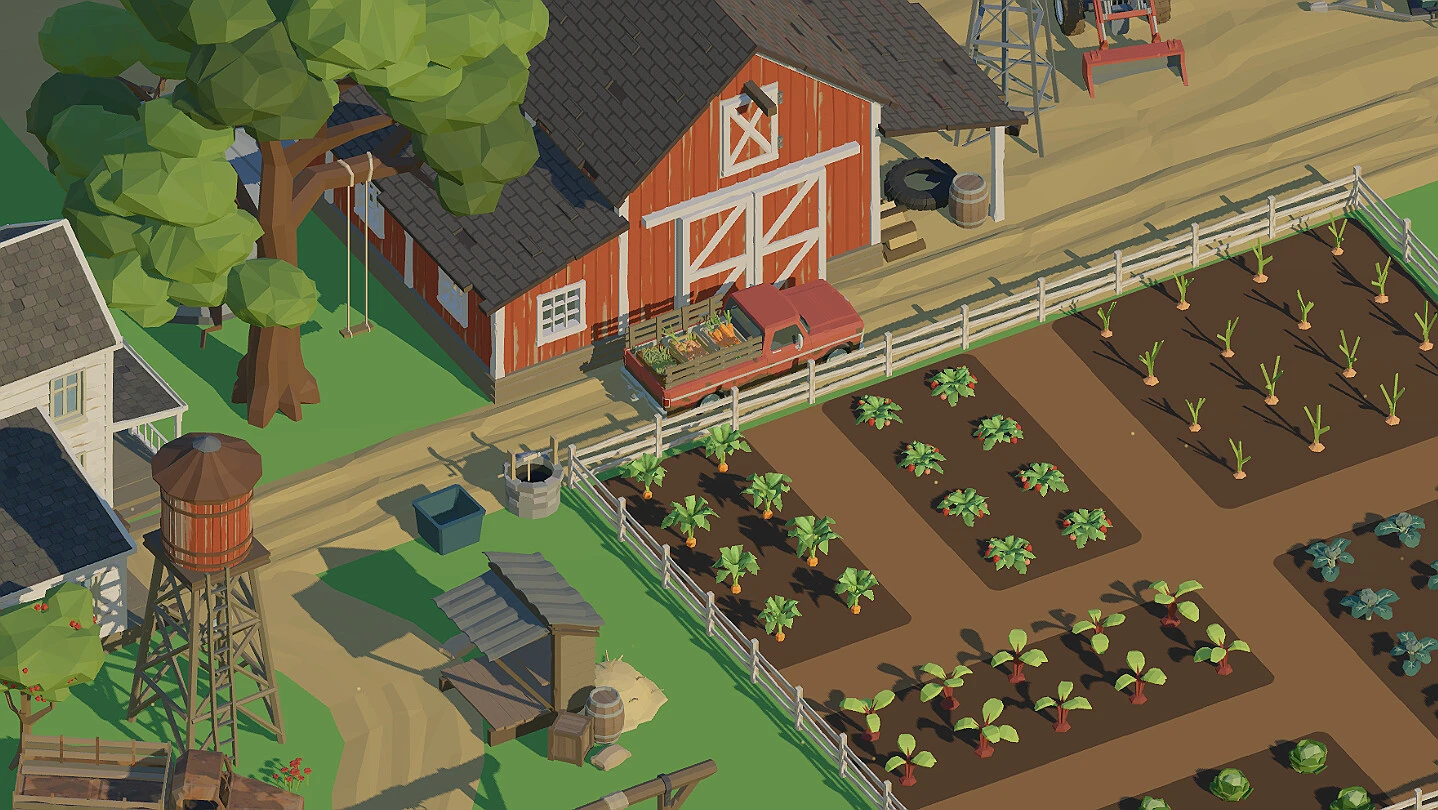
- Farm to Fortune farming guide: Build a repeatable route around preparation, planting, harvesting, and selling.
- Best starting habit: Keep every plot active while reserving resources for upgrades and emergencies.
- Profit priority: Compare sale value, growth time, input cost, and available storage before planting.
- Upgrade order: Improve plot capacity, movement, storage, and production speed before cosmetic options.
- Core lesson: Consistent cycles usually outperform risky decisions made for a single large payout.
Farm to Fortune farming guide: Start With a Strong Farm Plan
A reliable farm begins with a simple production plan. Do not plant every available option immediately. Instead, identify which crops fit your current space, tools, storage, and playtime. A crop with a high sale price may not be the best choice if it takes too long to mature or consumes resources needed for expansion.
Your first objective is to create a cycle that can be repeated without interruptions. Keep a portion of your farm dedicated to dependable income, then use the remaining space to test higher-value crops. This approach gives you steady progress while still allowing room for experimentation.
Steady Crops
- Short or moderate growth windows
- Predictable income
- Useful for early expansion
Premium Crops
- Higher potential sale value
- Longer waiting period
- Better after storage improves
Utility Crops
- Supports recipes or production
- May be more valuable than direct sales
- Keep a reserve for crafting
| Farm Option | Main Strength | Best Use | Main Risk |
|---|---|---|---|
| Fast-growing crops | Frequent harvests | Building early cash flow | Lower value per harvest |
| High-value crops | Strong individual payout | Planned investment cycles | Ties up plots longer |
| Utility crops | Supports processing | Crafting and order fulfillment | Less immediate gold |
| Mixed planting | Flexible output | Balancing income and materials | Requires more planning |
Start with a mixed layout instead of filling every plot with one crop. A balanced farm protects your income when demand, storage, or crafting needs change.
Before planting, check four questions:
- How many plots can be managed during the current session?
- Which inputs must be saved for tools, buildings, or processing?
- Can the storage hold the expected harvest?
- Will the crop finish before the next time you expect to return?
A good plan is not the one with the highest theoretical payout. It is the one you can complete consistently.
Build a Repeatable Farming Route
Once the farm has a basic layout, organize your actions into a route. The goal is to reduce unnecessary movement and ensure that every visit follows the same order. A repeatable route makes it easier to notice missed plots, empty production stations, or storage problems.
Use this sequence whenever you begin a farming session:
Inspect the Farm
Check ready crops, empty plots, available storage, and any production stations waiting for input. Begin with information gathering rather than immediate harvesting.
Harvest Ready Plots
Collect mature crops first, especially if they are blocking new planting. Move through the farm in one direction so no plot is skipped.
Process or Sort Materials
Send useful resources to crafting or processing stations. Keep direct-sale goods separate from materials reserved for recipes, orders, and upgrades.
Replant the Open Space
Fill empty plots with the next crop in your plan. Use fast crops for short sessions and longer crops when you expect to be away.
Sell and Reinvest
Sell the surplus, then reserve enough gold for the next upgrade or production cycle before spending on optional items.
| Route Stage | Action | Why It Matters |
|---|---|---|
| Inspect | Review plots, storage, and stations | Prevents wasted harvests and blocked production |
| Harvest | Collect mature crops | Opens space and secures current income |
| Process | Convert useful materials | Can improve value or support objectives |
| Replant | Start the next cycle | Keeps production moving between sessions |
| Reinvest | Fund capacity or efficiency | Improves future cycles instead of only current cash |
An empty plot is lost production time. If you cannot decide what to plant, use a dependable crop rather than leaving the space unused while waiting for a perfect opportunity.
Your route can also be adjusted around session length. For a short visit, prioritize quick harvesting, replanting, and selling. For a longer session, add processing, market comparisons, order completion, and upgrade planning.
Choose Crops by Real Profit, Not Sale Price
Sale price alone does not determine profitability. A crop should be judged by the complete cycle: required inputs, growth duration, plot usage, storage pressure, and whether the harvest is needed elsewhere.
Use a simple comparison method before committing a large section of the farm. If a crop produces a large payout but occupies a plot for several cycles, it may earn less over time than a faster crop harvested repeatedly.
| Measure | Question to Ask | Better Result |
|---|---|---|
| Input cost | How much must be spent before planting? | Lower cost for early progression |
| Growth time | How long until the crop is ready? | Shorter time for active sessions |
| Plot usage | How long does the plot remain occupied? | Efficient use of limited space |
| Storage demand | Can the harvest fit safely? | Enough room for the full cycle |
| Secondary value | Is it needed for recipes or orders? | Useful beyond direct sale |
A practical rotation has three layers:
- Cash layer: Crops intended for regular selling and upgrade funding.
- Crafting layer: Crops reserved for recipes, processing, or farm requests.
- Testing layer: A small area for new crops or higher-risk opportunities.
Short Session Route
Plant fast crops, harvest ready plots, sell surplus, and avoid long processing chains.
Long Session Route
Use longer crops, queue production, complete orders, and compare multiple selling options.
Expansion Route
Prioritize reliable cash crops until the next plot or storage upgrade is affordable.
Crafting Route
Reserve utility crops and process materials before selling the remainder.
Track the result of several cycles instead of judging a crop after one harvest. Repeated performance gives a clearer picture of value than a single large sale.
When comparing two crops, calculate an approximate cycle value:
Cycle value = total sale value − input cost − processing cost
Then consider how long the cycle takes and whether the crop occupies space needed for another objective. This calculation does not need to be perfect. Its purpose is to prevent decisions based only on the largest number shown in a shop or market menu.
Upgrade Order for Faster Farm Growth
Upgrades should remove the bottleneck that slows your farm most often. If crops are ready but storage is full, storage provides more value than a decorative improvement. If the farm has room but harvesting takes too long, movement or tool efficiency may be the better investment.
Use this general priority order:
- Plot capacity when every available space is actively used.
- Storage capacity when harvests frequently overflow or block production.
- Movement and tool efficiency when routine tasks consume too much time.
- Production capacity when processing queues are consistently full.
- Optional features and cosmetics after the main cycle is stable.
| Upgrade Type | Upgrade When | Expected Benefit |
|---|---|---|
| More plots | Existing plots stay active | Raises total production |
| Larger storage | Inventory fills during normal cycles | Reduces forced selling and wasted space |
| Faster movement | Farm routes take too long | Shortens routine sessions |
| Better tools | Harvesting or preparation is slow | Improves task efficiency |
| More production slots | Processing is constantly queued | Increases conversion capacity |
| Cosmetic upgrades | Core bottlenecks are solved | Improves presentation without affecting priorities |
Keep a reserve for the next productive upgrade before spending on optional purchases. A stronger farm cycle usually pays for future choices more reliably than one-time spending.
A useful upgrade test is simple: ask whether the purchase improves one of your repeated actions. If the answer is yes, compare its cost with the number of future cycles it could improve. If the answer is no, delay it until your main production route is stable.
Do not upgrade every system evenly. Specializing for a while is often more efficient. For example, a farm focused on direct sales may benefit from plot and storage improvements, while a crafting-focused farm may need processing capacity first.
Farm Growth Checklist:
- Keep the main plots active during every farming session
- Reserve materials needed for the next planned upgrade
- Expand storage before repeated inventory overflow
- Improve movement or tools when the route becomes inefficient
- Delay optional purchases until the core cycle is stable
Avoid Common Farming Mistakes
The most common mistakes are usually planning problems rather than crop problems. Players often spend all available gold after a successful harvest, then lack the resources needed to restart the next cycle. Others fill storage with low-priority goods and cannot collect a more valuable harvest.
Use the following safeguards:
- Keep a small cash reserve after every sale.
- Do not sell materials required for a known recipe or upgrade.
- Avoid filling every plot with a long-growth crop unless you can wait for it.
- Check storage before collecting a large harvest.
- Compare direct sales with processing before committing rare materials.
- Review the farm after each cycle and adjust one variable at a time.
| Mistake | Immediate Result | Better Correction |
|---|---|---|
| Spending all gold | Next cycle starts slowly | Reserve funds for inputs and upgrades |
| Planting only premium crops | Plots remain locked | Mix long-growth and reliable crops |
| Ignoring storage | Harvests become difficult to manage | Expand capacity or sell surplus earlier |
| Selling utility goods | Crafting progress stalls | Mark materials before selling |
| Changing the whole farm | Results become hard to compare | Test one layout change per cycle |
A farm journal can help if the game provides notes or if you track progress manually. Record the crop type, planting time, harvest result, sale value, and what the materials were used for. After several cycles, patterns become easier to identify.
Do not treat every stored item as spare inventory. Keep materials for the next planting cycle, planned upgrade, and active objective before selling anything that appears profitable.
The best farming route should feel predictable. If the process depends on perfect timing every session, simplify it. A slightly lower-yield route that fits your schedule can produce stronger long-term progress than a demanding route that is often interrupted.
Farm to Fortune Farming Guide FAQ
Q: What is the best starting strategy in the Farm to Fortune farming guide?
Begin with dependable crops, keep every available plot active, and reserve enough gold for inputs and the next productive upgrade. Use a small portion of the farm to test higher-value options.
Q: Should I focus on fast crops or high-value crops?
Choose fast crops when you play often or need immediate cash flow. Choose high-value crops when you can wait through the growth cycle and have enough storage for the harvest.
Q: Which upgrade should I buy first?
Buy the upgrade that removes your most frequent bottleneck. Plot capacity is useful when every space is active, while storage, movement, or production capacity may be better if those systems slow your route.
Q: Is it better to sell crops or process them first?
Process crops when the result supports an active objective or provides a clear value increase. Sell directly when processing would delay your next cycle or consume materials needed elsewhere.
Treat each harvest as feedback. Keep the parts of the route that save time, replace steps that create bottlenecks, and expand only when your current cycle can support it.
A successful farm is built through repeatable decisions: plant with a purpose, harvest on schedule, protect important materials, and reinvest in the systems used every cycle. Follow that rhythm and your farm can grow steadily without relying on risky all-in choices.