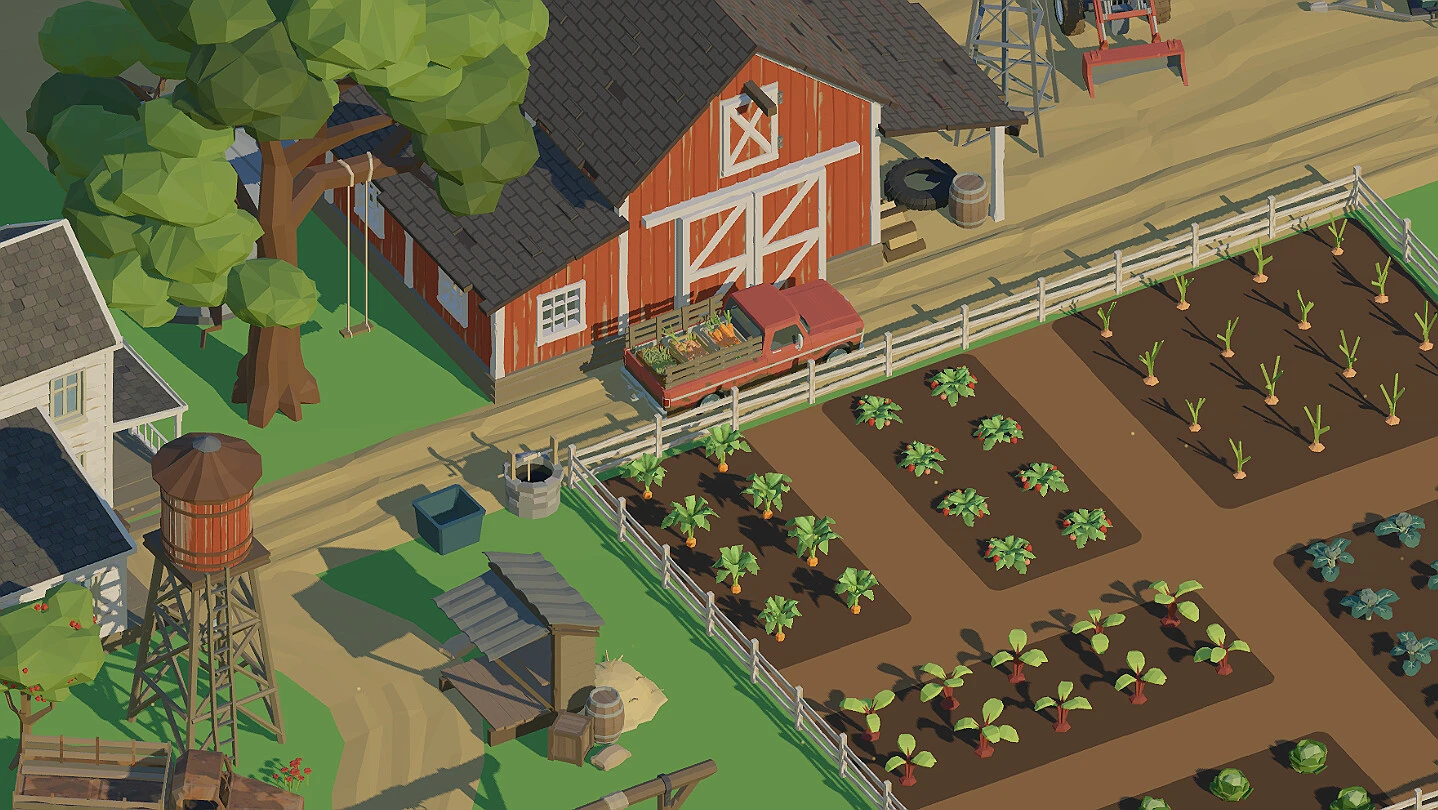
- Farm to Fortune gameplay guide covers the full plant-harvest-sell-reinvest loop
- Early game: keep every plot producing and never drain your starting funds
- Crop strategy: fast-cycle crops early, high-value crops once land expands
- Upgrade order: efficiency tools first, land expansion last
- Try the Demo on Steam before buying to test the core loop
Farm to Fortune Gameplay Overview
Farm to Fortune is a relaxing farming simulator released on Steam on October 30, 2026, developed by Ctrl Alt Defeat and published by Delayed Victory. The gameplay revolves around a simple but satisfying loop: plant crops, wait for growth, harvest, sell the produce, and reinvest the earnings into better tools, shop upgrades, and additional land.
You can try the core experience risk-free through the separate free Demo listing on Steam, then carry your understanding of the loop into the full progression.
| Feature | Detail |
|---|---|
| Developer | Ctrl Alt Defeat |
| Publisher | Delayed Victory |
| Release Date | October 30, 2026 |
| Platform | Steam (AppID 5025010) |
| Free Demo | Yes, separate Steam listing |
| Languages | 30 supported languages |
Check the official Steam store page for current pricing, the Gameplay Trailer, and community discussions.
The Core Farming Loop: Step-by-Step
The early game rewards consistency over big spending. A steady production cycle beats a single large purchase almost every time. Follow this sequence to establish a reliable income foundation.
Plant Available Crops
Use the plots you already have. Plant what you can afford while keeping a cash reserve for the next cycle. Avoid spending your entire starting balance before the first harvest.
Harvest and Sell
Return when crops are ready, harvest, and sell the produce at the shop. This converts your time into usable funds and is the core income engine of the game.
Reinvest in the Most Useful Upgrade
Spend early profits on upgrades that speed up or improve actions you perform every cycle—planting, harvesting, and selling—rather than buying everything at once.
Expand After Income Stabilizes
Buy additional land only when current plots are consistently in use and your cash flow can fill the new space immediately.
Leaving plots empty while saving for an expensive upgrade slows your total income. An idle plot earns nothing, so keep production running even during small savings phases.
Crop Strategy and Profit Planning
Crop decisions should balance more than the final sale price. Fast-growing crops allow frequent reinvestment, while high-value crops pay off when you have the space and funds to wait through longer cycles.
| Crop Type | Growth Time | Sale Value | Break-Even | Best Stage |
|---|---|---|---|---|
| Fast-cycle crop | Shortest interval | Lower per unit | Fast | Early game |
| Balanced crop | Moderate interval | Moderate | Medium | Developing farm |
| High-value crop | Longest interval | Highest per unit | Slow per cycle | Established farm |
How to choose:
- Early game: run fast-cycle crops to build cash flow and fund your first meaningful upgrade
- Mid game: mix balanced crops to maintain steady income while improving tools
- Late game: shift toward high-value crops once expanded land can absorb longer waits between sales
Ask one question before every sale: does this money work harder as a new seed batch or as an upgrade? If plots sit empty, seeds win. If plots are full, upgrades win.
Upgrade Priorities: What to Buy First
The best upgrade path depends on how often an improvement touches your daily routine. Upgrades that affect repeated actions deliver the most value per coin spent.
Early Priority: Tools & Efficiency
- Improves every cycle action
- Planting, harvesting, selling speed
- Buy when it reduces repeated effort
- Avoid stacking minor upgrades that delay the next cycle
Mid Priority: Growth & Yield
- Shortens downtime per plot
- Increases output from active plots
- Buy once most plots are in steady production
- Avoid buying before production volume justifies it
Late Priority: Shop & Land
- Raises long-term capacity
- Unlocks room for larger cycles
- Buy when existing plots are fully used
- Avoid expanding into capacity you cannot fill
| Upgrade Tier | Focus | Buy When | Avoid |
|---|---|---|---|
| Early | Tools, production efficiency | Upgrade immediately boosts routine output | Several small purchases at once |
| Mid | Growth speed, yield | Farm produces consistently across most plots | Investing before plot volume exists |
| Late | Shop improvements, land | Cash flow supports expansion without gaps | Expanding with idle plots |
New land is most valuable the moment you can plant it fully on arrival. If a purchase would leave half the new plots empty for several cycles, delay it and upgrade efficiency instead.
Progression Milestones and Checklist
Farm to Fortune's progression runs from the starting plot to a large-scale operation. Track these milestones as you play so repeated actions, shop activity, upgrades, and expansion all contribute to your long-term goals.
| Stage | Goal | Key Actions |
|---|---|---|
| 1. Starting farm | Reliable first income | Use all starting plots, finish opening objectives |
| 2. Repeatable routine | Steady cycle | Keep plots productive, save for shop purchases |
| 3. Shop investment | Improve production | Match purchases to current farm needs |
| 4. Expansion | Larger operation | Upgrade tools, unlock new land, fill it fast |
Essential Farm Milestones:
- Establish a full planting-harvesting-selling cycle
- Fund your first efficiency upgrade
- Reach consistent production across all plots
- Complete shop-related objectives
- Expand land and fill it immediately
If you are unsure about the pace, download the Farm to Fortune Demo to test the core loop before purchasing the full game.
FAQ
Q: What is the Farm to Fortune gameplay loop?
The loop is plant, wait for growth, harvest, sell at the shop, and reinvest the proceeds into seeds, tool upgrades, and eventually land expansion. Keeping this cycle running without idle plots is the core of efficient play.
Q: Should I buy land or upgrades first?
Upgrades first. Improvements to tools and production efficiency affect every cycle you already perform, while new land only pays off when you have the funds and capacity to plant it immediately. Expand after income stabilizes.
Q: Which crops are best early in Farm to Fortune?
Fast-cycle crops are the strongest early choice because they convert effort into cash quickly and fund your first upgrades. Shift toward balanced and high-value crops as your land and funds grow.
Q: Is there a free Demo?
Yes. A separate free Demo listing exists on Steam, letting you experience the core farming loop before buying the full version released on October 30, 2026.